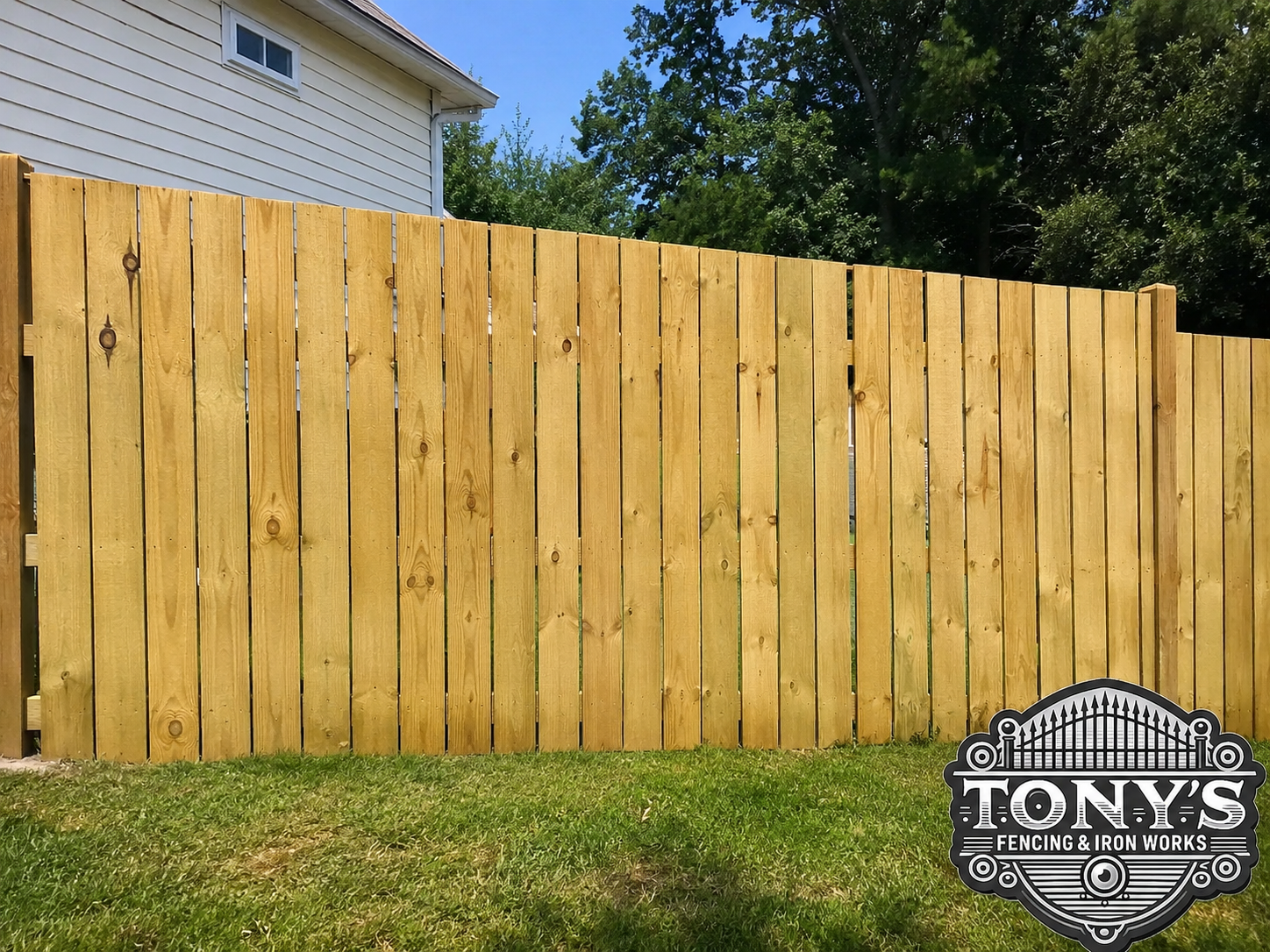
Late-summer heat, rain and humidity can cause pine and cedar fence boards to change size without signaling structural failure.
COVINGTON, LA, UNITED STATES, August 31, 2026 /EINPresswire.com/ — Tony’s Fencing & Iron Works is sharing seasonal fence-maintenance information for Southeast Louisiana homeowners who notice spaces developing between wood privacy fence boards during late summer.
Changes in spacing do not always mean a fence is failing. Because wood naturally gains and loses moisture, boards can become wider or narrower as outdoor conditions change.
That process can be especially noticeable in Southeast Louisiana, where wood fencing may experience heavy rain, high humidity, strong sunlight and prolonged summer heat within a short period.
“Small gaps can be part of normal wood movement, while leaning posts, loose rails or sudden uneven openings may point to a separate repair issue,” according to Tony’s Fencing & Iron Works.
The USDA Forest Products Laboratory has documented the relationship between wood moisture and changes in dimensions. As moisture content changes, wood can shrink or swell.
Pressure-Treated Pine Can Change After Installation
Pressure-treated pine is commonly used for residential privacy fencing because it offers privacy, a traditional appearance and a relatively affordable material option. However, treatment does not stop the wood from exchanging moisture with its surroundings. Boards may contain more moisture when installed than they do several weeks or months later. As that moisture leaves the lumber, individual boards may become slightly narrower. As a result, small gaps that were not visible immediately after installation can gradually appear. Cedar can change as well. Although cedar is often selected for its natural appearance and relative stability, it remains a natural wood product and can respond to moisture, sun and weather.
Normal Shrinkage and Structural Problems Are Different
Homeowners can learn more by looking beyond the space between two boards. Small, fairly even gaps may be less concerning when fence posts remain straight, rails stay secure and gates continue to operate normally.
By comparison, several conditions may deserve closer inspection:
A single opening becomes much wider than neighboring gaps.
A board begins pulling away from a rail.
Several boards twist or bow severely.
A fence post moves when pressure is applied.
A gate suddenly drags, sags or stops latching correctly.
A full section begins leaning.
Soil washes away around a post.
Wood becomes soft or crumbly near ground level.
These conditions may involve loose hardware, damaged lumber, post movement, poor drainage or other structural issues rather than simple board shrinkage.
DIY Fence Check for Louisiana Homeowners
A basic visual inspection can help document changes before repair decisions are made.
First, the fence can be viewed from both sides when access allows. Looking lengthwise down the fence often makes leaning posts or uneven sections easier to spot. Next, several gaps can be compared instead of focusing on a single board. Similar spacing across many pickets may point toward normal drying. Posts and rails should also be inspected. A moving post can affect several boards at once, while a cracked or loose rail may cause boards to shift independently. After heavy rain, the ground around the fence line can provide additional clues. Standing water, washed-out soil or areas that remain saturated may affect post stability. Finally, homeowners can photograph an area over time. Including a ruler in the photograph can make later comparisons more useful.
Common DIY Mistakes Can Create New Problems
Attempts to eliminate every visible gap may cause unnecessary damage. Caulk generally should not be used to fill spaces between wood fence pickets because outdoor wood needs to respond naturally to moisture. Likewise, forcing a warped board tightly against neighboring boards without finding the cause may place additional stress on the lumber or fasteners. A few damaged pickets also do not automatically require complete fence replacement. If posts and rails remain sound, individual boards may sometimes be repaired or replaced.
Drainage and Landscaping Also Matter
Louisiana fence performance depends on more than the boards themselves. Sprinklers that repeatedly spray wood, mulch piled against lower fence sections, dense vegetation and poor drainage can increase moisture exposure. Meanwhile, repeated contact from string trimmers can damage the bottoms of pickets and posts. For that reason, seasonal fence checks should include the surrounding yard as well as the fence.
Frequently Asked Questions
Is it normal for a new wood fence to develop gaps?
Small, fairly even gaps can develop as wood dries and changes size.
Does pressure-treated pine shrink?
Yes. Pressure treatment helps protect lumber, but it does not stop normal moisture-related movement.
Does cedar shrink?
Yes. Cedar can also expand and contract as moisture changes.
Will gaps close after rain?
Some wood may swell after taking on moisture, although every opening may not disappear.
Do fence gaps mean poor installation?
Not necessarily. Normal wood movement can create spacing even when the overall fence remains secure.
When is a fence gap more concerning?
Uneven openings combined with loose boards, moving posts, leaning sections or gate problems may deserve further inspection.
Can individual boards be repaired?
In some cases, yes. Repair options depend on the condition of the posts, rails and surrounding boards.
Can drainage affect a fence?
Yes. Saturated soil, standing water and erosion may affect post stability and long-term wood condition.
Tony’s Fencing & Iron Works has published additional homeowner information about wood fence gaps in Louisiana at:
https://tonysfencingandiron.com/wood-fence-gaps-louisiana/
About Tony’s Fencing & Iron Works
Tony’s Fencing & Iron Works provides fence installation and repair services throughout Covington, Mandeville, Madisonville, Hammond, Ponchatoula, Slidell and surrounding Southeast Louisiana communities. Services include pine and cedar fencing, wood fence repair, chain link, vinyl, ornamental iron, aluminum pool fencing, farm fencing and custom gates.
Tony’s Fencing & Iron Works
Covington, Louisiana
985-703-0595
https://tonysfencingandiron.com/
Gwen M.
Designs For You
email us here
Visit us on social media:
Facebook
Legal Disclaimer:
EIN Presswire provides this news content “as is” without warranty of any kind. We do not accept any responsibility or liability
for the accuracy, content, images, videos, licenses, completeness, legality, or reliability of the information contained in this
article. If you have any complaints or copyright issues related to this article, kindly contact the author above.

Media gallery