
CHARLOTTE, NC – X-Sense highlights the growing need for whole-home protection as fire behavior in modern households becomes increasingly unpredictable.
Many people are aware of the value of having smoke alarms, but the location in which they are placed strongly affects how quickly a fire can be detected and how much warning residents receive.
With a properly placed smoke alarm, residents are alerted at a very early stage of a fire, which provides critical time to respond. Random installation throughout a house may leave gaps in coverage while placing alarms where they are not needed.
Why Smoke Detector Placement Matters
Smoke rises quickly, which is why smoke alarms are usually installed on ceilings or high on walls. The goal is to detect smoke as early as possible before it spreads throughout the home.
A well-planned setup ensures that sleeping areas, living spaces, and high-risk areas receive proper coverage. Homes with multiple floors, larger layouts, or separate bedrooms may require more than one alarm for complete protection.
Choosing a reliable smoke alarm and installing it in the right locations can help create a safer environment for everyone in the household.
Bedroom Areas
Bedrooms are among the most important rooms to cover, because fires can quickly get out of hand while people are asleep. Smoke alarms inside or near each sleeping area provide an early warning during an emergency.
Each sleeping area of a multi-bedroom home should be covered properly. This matters especially because smoke can affect people before they realize a fire has started.
Hallways Outside Bedrooms
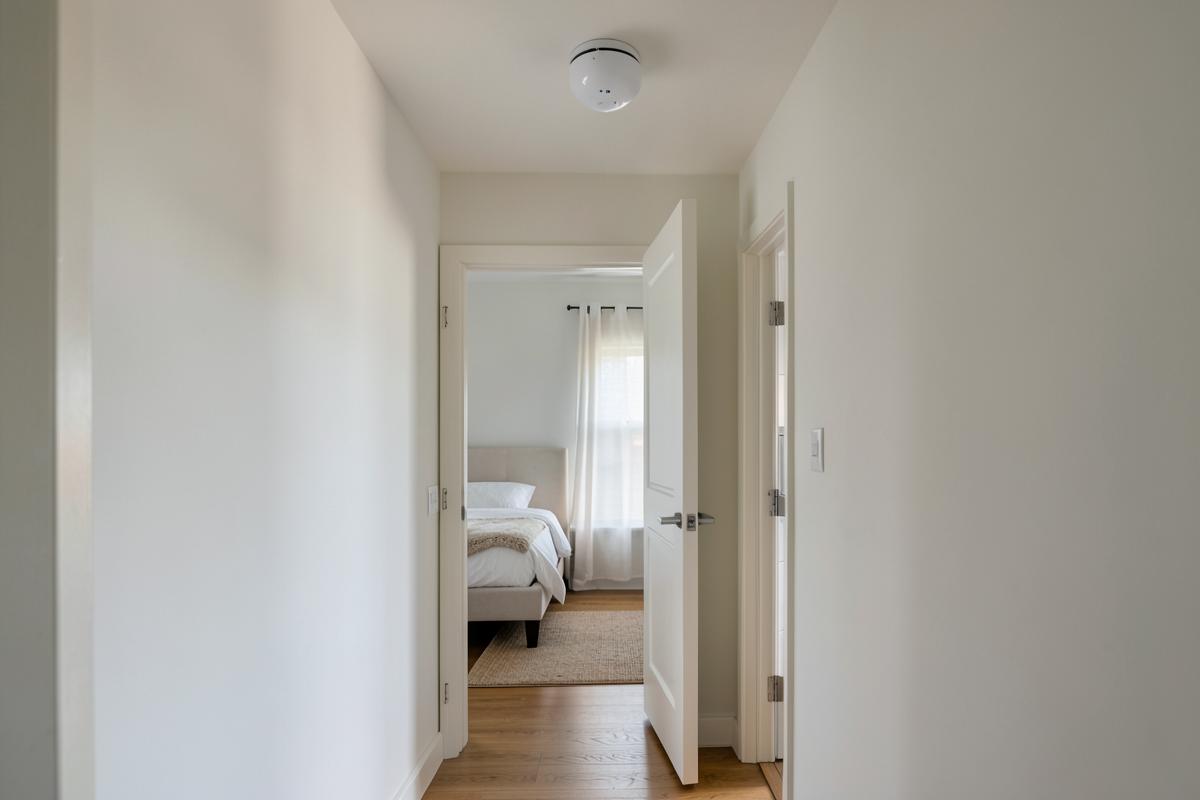
Smoke detectors in the hallways outside bedrooms add an extra layer of safety. A hallway alarm can detect smoke drifting from another room at night and alert sleeping residents quickly.
Hallway coverage is equally critical for bedrooms set apart from common areas, since it provides a safety link between sleeping areas and the rest of the house.
Living Rooms and Common Areas
Families spend a great deal of time in living rooms. Electrical equipment, fireplaces, and candles can all raise fire risk in these spaces.
A living area smoke detector provides early warning if smoke originates from an unexpected source. Alarms should not be placed too close to fireplaces or other sources of normal smoke, which could cause false alarms.
Kitchen Placement
Cooking is one of the leading sources of household fires, but installing a smoke alarm directly above cooking appliances is generally not advisable. Cooking generates smoke and steam that can trigger unnecessary alarms.
Instead, smoke alarms should be placed in the kitchen vicinity but far enough away that routine cooking does not set them off.
Basements and Garages
Electrical wiring, heating systems, and stored materials can all act as ignition sources in a basement. A smoke detector installed there alerts residents to a fire that starts below the main living space.
Care is needed when selecting a detector for a garage, since exhaust, dust, and temperature changes can influence performance. Manufacturer guidelines should always be followed for garage installations.
Multi-Story Homes
Multi-level homes require careful positioning so that every level is protected. There should be at least one smoke detector on each floor, including near stairways.
Staircases are important places for early detection because fire moves quickly from floor to floor. Depending on the size of the home, interconnected smoke alarms add convenience: when one alarm sounds, alarms throughout the house warn residents.
Features to Look for in a Smoke Detector
When selecting a smoke detector, homeowners should consider sensor technology, battery life, certifications, installation process, and maintenance requirements.
Modern smoke alarms offer features that improve convenience and reliability, including wireless connectivity, interconnected systems, and long-lasting batteries.
For homeowners looking for advanced protection, the X-SENSE SD19-W wireless interconnected smoke alarm provides wireless interconnection technology designed to help protect multiple areas of a home. The device allows compatible alarms to communicate with each other, helping ensure that alerts can be heard throughout the property.
Maintenance Tips for Smoke Detectors
Installing a smoke detector is only the first step. Regular maintenance keeps devices working correctly. Homeowners should:
- Test alarms periodically following manufacturer guidelines
- Change batteries as needed
- Keep dust and debris from accumulating near the detector
- Replace units according to their recommended service life
- Discuss emergency plans with everyone in the household
A poorly maintained smoke alarm may not perform as intended during an emergency.
Final Thoughts
The effectiveness of a smoke detector depends on placement as much as on the device itself. Bedrooms, hallways, living rooms, and every level of a house all need proper coverage.
With a targeted plan and reliable safety devices, homeowners increase their chances of hearing an early warning and acting quickly. A well-considered smoke alarm layout is a simple measure that can save lives and property.
About X-SENSE Innovations
Founded in 2013, X-SENSE Innovations operates from its registered U.S. address at X-SENSE USA LLC, 1209 Orange St, Wilmington, DE 19801, and specializes in developing certified home fire and safety solutions for both residential and commercial environments. The company focuses on producing professional and user-friendly safety devices, including domestic fire alarms such as smoke, carbon monoxide, and heat alarms, as well as smart home safety systems covering fire protection, intrusion detection, and indoor environment monitoring.
More information is available at www.x-sense.com.
Official company social media profiles: Facebook and Instagram.
Media Detail
Contact Person Name: Farrukh
Company Name: X-Sense
Email: service@x-sense.com
Website: https://www.x-sense.com/
Phone: +1 (833) 952-1880


