
Originally Posted On: https://modernbusinesstips.com/8-ways-extended-motorcycle-warranties-help-when-a-breakdown-strands-you-far-from-home/
Top Picks at a Glance
Eight ways extended motorcycle warranties help when you’re stranded, in scan-ready form:
-
Engine coverage: saves your trip from a seized top end
-
Transmission and primary drive: covers the repairs that hurt most
-
Electrical and ECM: handles the gremlins that strand riders
-
Any ASE-certified shop: no hunting for a faraway dealer
-
24/7 roadside and towing: gets you off the shoulder
-
Trip interruption: pays for a motel and meals
-
Direct shop payment: no thousands on your credit card
-
Transferable plan plus 30-day guarantee: protects resale and your decision
Top pick: Premier Auto Protect, with Harley-Davidson and Indian powersports coverage, a nationwide ASE-certified network, and roadside and trip interruption built in.
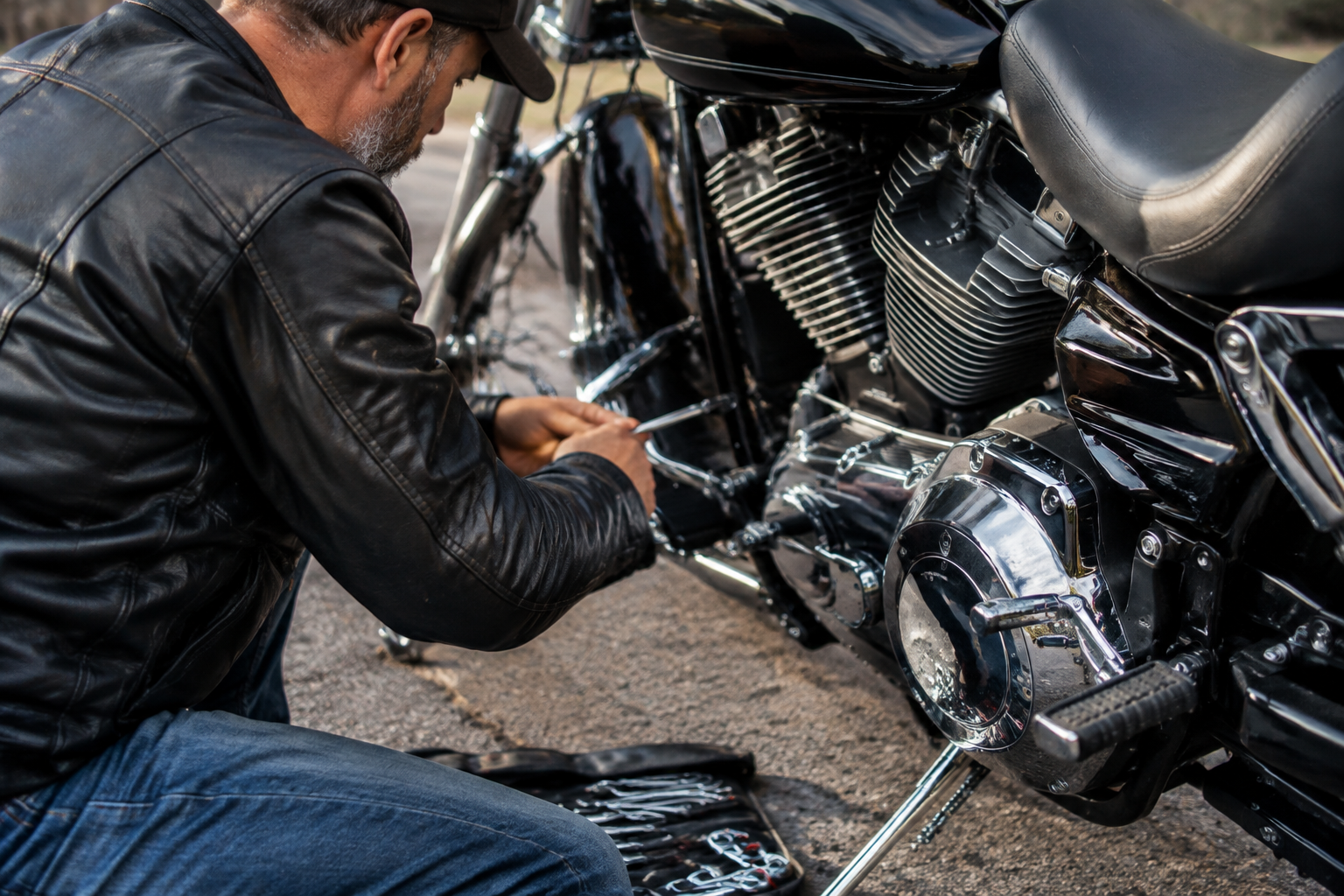
A dead primary drive 800 miles from your garage doesn’t just cost money. It ends a summer. Anyone who’s turned wrenches on Harley-Davidson and Indian cruisers for 25 years has watched it happen, usually to a rider who figured the bike was “good for one more season.”
Here’s the problem with 5-to-12-year-old bikes: factory coverage is long gone, and that’s right when cam tensioners wear, regulators quit, and ECMs start throwing gremlins. Extended motorcycle warranties, which are really vehicle service contracts, exist for exactly that stretch. They don’t make a bike bulletproof (nothing does). They change who’s holding the bill when something lets go in the middle of nowhere.
So what happens when the bike quits on a long tour, miles from your trusted shop and hours from the nearest dealer? That’s where the details of a contract matter more than the sales pitch.
Why Long-Distance Riders Need a Plan Before the Bike Quits
A rider pulls off a two-lane road at mile 800 of a summer trip. His primary drive just let go, and the nearest Harley dealer is two counties away. Trip over. Wallet open.
That’s the mechanic’s-eye view of it. After 25 years under cruisers, I’ve seen a failed primary drive or a dead ECM turn a three-week ride into a tow, a motel, and a repair bill nobody budgeted for. It happens far more often on bikes in the 5-12 year range.
So here’s what a service contract actually does. Extended motorcycle warranties are vehicle service contracts that pay for covered repairs on engines, transmissions, and electrical parts once the factory coverage is gone. On most Harley-Davidson and Indian cruisers this age, it’s long gone.
The eight items below show where that protection earns its keep when you’re stranded far from home.
1. Engine Failure Coverage Keeps a Seized Top End From Ending Your Trip
A dead top end ends a tour fast. Most extended motorcycle warranties cover the internal lubricated parts: pistons, rings, crankshaft, camshaft, and the valve train. That’s the stuff that eats a rider’s summer when it lets go 800 miles from the garage.
Here’s what a 25-year wrench sees all the time. High-mile Twin Cams and Milwaukee-Eights develop cam chain tensioner and lifter trouble. A tensioner goes soft, the chain slaps, and a lifter starts ticking. Ignore it, and a top end turns into scrap.
One invoice stays with me. A rider on a week-long tour felt a tick near the halfway point, kept going, and ended up in a shop with a full top-end rebuild and a bike on a lift for nine days. A plan like an Indian Motorcycle Extended Warranty exists for exactly that kind of morning.
Tip: keep every oil change receipt.
Maintenance records back up your claim, and a missing paper trail gives a reason to push back.
2. Transmission and Primary Drive Protection Covers the Repairs That Hurt Most
What happens when a six-speed starts popping out of gear 300 miles into a ride? Nothing good. A failed primary or gearbox can’t be fixed with a roadside tweak, and the bike isn’t rolling anywhere under its own power.
That’s why transmission and primary drive coverage matters so much in extended motorcycle warranties. Most contracts name gearbox internals, primary drive components, and clutch-related parts. Those are the repairs that wreck a riding season. A strong plan pays the shop directly, so you aren’t floating a huge bill in a town you’ve never seen.
Owners of other premium machines face the same problem. The logic behind a Mercedes-Benz Extended Warranty is identical: drivetrain failures are the costly ones, so that’s where coverage should be strongest.
Tip: read the contract’s stated-component list line by line. If the primary chaincase parts, clutch pack, or gear set aren’t named, ask before you sign.
3. Electrical and ECM Coverage Handles the Gremlins That Strand Riders
Roughly one in three roadside calls on late-model cruisers traces back to a dead battery, and the battery is usually the victim, not the culprit. A failed stator or regulator is. Good extended motorcycle warranties cover the charging system, starter, voltage regulator, and ignition and control modules, including the ECM.
Picture a rider 200 miles from home. The stator quits, the battery drains, and the bike dies on an empty stretch of highway. That’s a tow, a diagnosis, and a pricey part. Coverage turns it into a deductible. (Owners of other brands shopping around can compare how a Chevrolet Extended Warranty treats electrical components too.)
Why Electrical Faults Are the Hardest to Diagnose on the Road
Electrical problems hide. They come and go, and they won’t show up when the bike’s sitting on a lift.
-
Intermittent faults that vanish before the tech can trace them
-
Specialist tools like scanners and load testers that most small shops lack
-
Long diagnostic time, often hours before a part is even named
Those shop hours add up fast. Coverage means you aren’t paying for guesswork.
4. Repair at Any ASE-Certified Shop Means You’re Not Tied to a Faraway Dealer
Dealer-only repair isn’t the safe bet most riders assume.
Plenty of extended motorcycle warranties force you back to a brand dealership, and that’s a bad deal when you’re 300 miles from the nearest one. Premier Auto Protect works differently. Any ASE-certified facility nationwide can do the work, including the independent mechanic you already trust.
Why does that matter? Because a dealer’s service bay might sit hours off your route, with a week-long backlog on top. In a small town, a local shop can often get your bike on the lift the same day. That’s the difference between losing an afternoon and losing your whole trip.
The same freedom applies to other vehicles in the household.
Owners who read up on a Hyundai Extended Warranty will find the same shop flexibility there.
Tip: call the claims line before authorizing any teardown. Once a shop starts pulling the primary or the engine apart, you want the repair approved first. Skip that call and you risk a dispute over work already done.
5. 24/7 Roadside Assistance and Towing Gets the Bike and You Off the Shoulder
A rider on a fully loaded touring bike picks up a nail on a rural stretch. No cell bars for miles. Rear tire flat, saddlebags packed, a passenger on the back. Nobody’s pushing that rig anywhere.
That’s where roadside help earns its keep. Good extended motorcycle warranties bundle in towing to the nearest qualified shop, jump starts, fuel delivery, and flat-tire help. Premier Auto Protect includes 24/7 assistance on every plan, and the same idea carries across its vehicle lines, including a Nissan Extended Warranty for riders who also keep a car in the garage.
Why does it matter? A touring bike runs 800 pounds or more. Without a proper flatbed, you risk dropping it, bending a fork, or cracking bodywork. A wrecker with straps — no experience is a bad bet.
-
Towing to a qualified shop
-
Jump starts for a dead battery
-
Fuel delivery if you run dry
-
Flat-tire help
Tip: save the assistance number in your phone and write it on a card in your saddlebag. Dead phones happen.
6. Trip Interruption Benefits Cover Hotel and Meals While Your Bike Sits in the Shop
A breakdown on the road doesn’t end when the tow truck leaves.
Trip interruption reimbursement pays for lodging and meals when a covered failure strands a rider far from home. Many extended motorcycle warranties include it, and it matters more than most riders expect.
Take a rider at a rally whose stator quits on day one. The shop orders parts, and they’re backordered. That’s three nights in a motel plus restaurant meals, and it adds up fast. Trip interruption takes the sting out of it (as long as the failure is a covered one).
Rental and Ride-Home Planning
Rental reimbursement and trip interruption work as a pair. One keeps you moving, the other keeps you housed and fed. Providers that cover cars handle the same logic, and a page like this Kia Extended Warranty overview shows how rental and trip benefits are typically described.
Before you sign, confirm these in the contract:
-
Daily limits for hotel and meals
-
Maximum days covered per claim
-
Mileage from home required to qualify
-
Receipt rules for reimbursement
7. Direct Shop Payment Means You Aren’t Fronting Thousands on a Credit Card
What happens when the shop hands you a four-figure estimate and you’re 900 miles from your garage? That’s where the claims flow matters more than the coverage list.
With extended motorcycle warranties, the process runs like this:
-
The shop diagnoses the problem.
-
The shop calls the provider.
-
The provider authorizes the covered repair.
-
The shop completes the work.
-
The provider pays the shop directly, and you cover only the deductible.
Skip that, and you’re the bank.
A failed stator or a cooked primary can run into the thousands, and most riders on a long trip aren’t carrying that much available credit. Even those who are don’t want to burn it on a roadside repair in July.
Owners of other brands get the same flow. A Husqvarna Extended Warranty, for example, works through the same shop-to-provider authorization steps.
Tip: before a wrench touches the bike, ask the shop to get authorization first. Work done without it can be denied. Simple as that.
8. Transferable Coverage and a 30-Day Money-Back Guarantee Protect Your Resale and Your Decision
Plenty of riders sell their bike within three years of buying a plan, and most never think about what happens to the coverage. Don’t make that mistake. In eligible states, Premier Auto Protect plans can pass to the next owner. On a 10-year-old Harley or Indian, that’s a real selling point.
Buyers of older cruisers worry about primary drives, ECMs, and charging systems. A plan that’s still active tells them the repair risk is covered. Same goes for riders on other brands, including the Triumph Extended Warranty option.
Then there’s the guarantee. Every plan comes with a 30-day money-back guarantee, so the decision isn’t a leap of faith.
-
Tip: use that window to read the full contract, exclusions included.
-
Check what’s covered, what isn’t, and how claims get filed.
It’s the top pick among extended motorcycle warranties for a reason: powersports coverage for Harley-Davidson and Indian, a nationwide ASE-certified network, roadside help and trip interruption built in, and terms that are easy to read.
How to Choose the Right Extended Motorcycle Warranty for Your Cruiser
The most expensive plan isn’t the best one. Plenty of riders overbuy, and plenty more underbuy. A seven-year-old Road King with 40,000 miles needs different protection than a ten-year-old Softail that’s logged 90,000.
Match the plan to the bike. Powertrain coverage handles the engine, transmission, and primary drive. Broader stated-component or exclusionary options add electrical parts like the ECM, which is where cruisers get pricey.
Before signing, check these:
-
Repair shop freedom: any ASE-certified facility, not just a dealer.
-
Deductible structure: per visit or per repair.
-
Claim limits: per claim or total.
-
Waiting period: typically 30 days and 1,000 miles.
-
Maintenance record rules: keep every receipt.
Expect exclusions for maintenance items, wear items, pre-existing conditions, and neglect. Buy before a problem shows up, because existing issues won’t be covered.
Get a Premier Auto Protect plan reviewed during the 30-day guarantee period.
A bike that quits 800 miles from home is a bad day. A bike that quits with no plan is a ruined summer. The difference usually comes down to paperwork signed months earlier.
Extended motorcycle warranties work because they cover the whole chain of trouble, not just the part that broke. A covered engine or primary drive repair gets paid by the provider. A tow gets the cruiser off the shoulder. Hotel and meal reimbursement keeps a rider comfortable while parts ship. And since any ASE-certified shop can do the work, a rider in a small town isn’t stuck waiting on a dealer hours off the route.
Riders with 5-12-year-old Harley-Davidson and Indian bikes sit in the exact age window where factory coverage is gone, and big failures start showing up. Waiting for a symptom is the wrong move, because existing problems aren’t covered.
Premier Auto Protect earns the top spot for this kind of rider. It offers powersports plans for both brands, a nationwide shop network, built-in roadside help, and clear contract terms.
The next step is simple. Request a Premier Auto Protect plan for your bike, then use the 30-day money-back guarantee to read every line, exclusions included. If it fits your riding, keep it. Then pack the saddlebags and go.


