SHENZHEN, GUANGDONG, CHINA, April 28, 2026 /EINPresswire.com/ — For importers, distributors, retail brands, device manufacturers, and industrial procurement teams, AA alkaline batteries are no longer a simple commodity purchase. Stable output, reliable shelf life, compliant labeling, customized packaging, and consistent bulk delivery now directly affect product quality, channel reputation, and market access in Europe and North America.
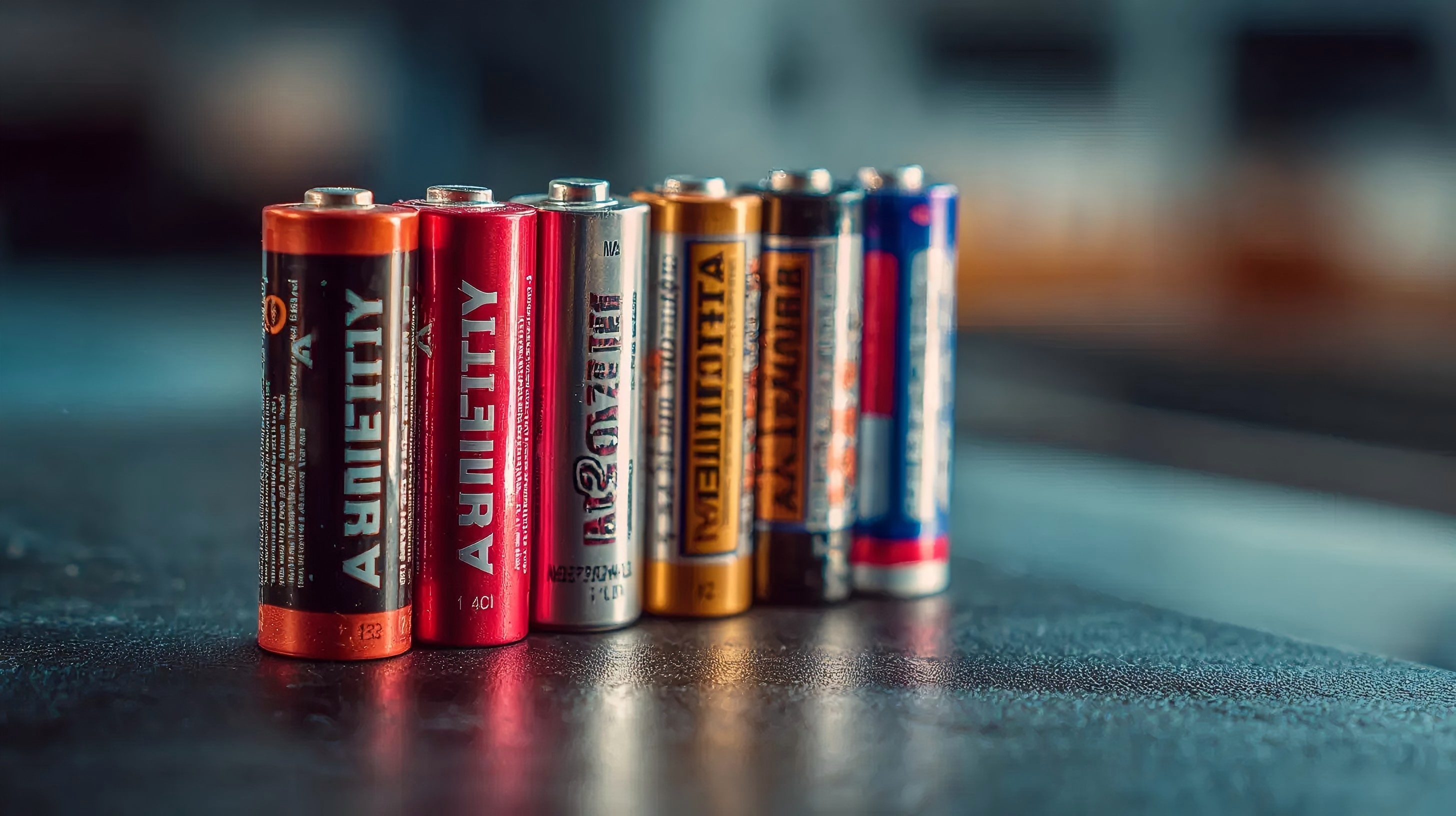
AA alkaline batteries remain one of the most widely used portable power solutions for daily-use and professional devices. Remote controls, wireless mice, keyboards, toys, flashlights, clocks, security keypads, sensors, and small electronic accessories all depend on reliable 1.5V power. For B2B buyers, the key question is not only whether the battery works, but whether the supplier can deliver the same performance across repeated orders, different packaging formats, and changing compliance requirements.
As performance standards, supply expectations, and environmental requirements continue to rise in Europe and North America, AA alkaline battery procurement is becoming more specialized. A qualified AA alkaline battery manufacturer is expected to provide more than a standard 1.5V cell. Importers, distributors, retail brands, and device manufacturers also need stable bulk production, OEM/ODM packaging support, export documentation, and label compliance experience for regulated markets.
GMCELL’s AA alkaline battery supply model fits this shift toward structured B2B sourcing. Established in 1998, GMCELL integrates battery development, production, and sales, supported by a 28,500-square-meter factory, over 1,500 employees, 35 R&D engineers, and 56 quality control members. For buyers sourcing wholesale AA alkaline batteries, these manufacturing foundations help support repeatable quality, stable supply, and customized packaging programs.
Why AA Alkaline Batteries Still Matter in B2B Supply Chains
AA alkaline batteries continue to hold a strong position because they balance cost, availability, shelf life, and stable voltage output. For low-drain and medium-drain devices, they provide dependable performance without requiring charging infrastructure. This makes them suitable for retail packs, promotional bundles, hardware accessories, educational products, home security devices, and industrial maintenance kits.
From a procurement perspective, AA alkaline batteries often ship together with end products. A weak or leaking battery can damage not only the device but also the buyer’s brand image. For importers and OEM device brands, the battery becomes part of the end-user experience. Even when the battery is not the main product, it can still influence customer satisfaction, warranty claims, and repeat orders.
GMCELL’s 1.5V /AA/AM3 alkaline battery is designed for common professional and consumer applications such as remote controls, Bluetooth keyboards, wireless mice, security keypads, motion sensors, toys, cameras, portable fans, and alarm clocks. With 2100mAh capacity, mercury-free alkaline chemistry, anti-leakage design, and a five-year shelf life, the product supports buyers that need stable performance across long storage and distribution cycles.
A qualified industrial AA alkaline battery supplier should therefore provide more than a basic price list. Buyers need clear product specifications, discharge performance information, packaging options, compliance documents, and stable production scheduling. In bulk orders, small differences in quality control can become large commercial risks.
Battery Chemistry and Performance Consistency
A standard AA alkaline battery uses a zinc-manganese dioxide chemical system with an alkaline electrolyte. This chemistry supports higher energy output than traditional zinc-carbon batteries and helps maintain reliable voltage across many common applications. For B2B buyers, the chemistry matters because it affects discharge time, leakage resistance, shelf life, and device compatibility.
In practical use, a 1.5V LR6 AA alkaline battery is often selected for devices that require steady current over a long operating period. Remote controls, wireless accessories, alarm clocks, motion sensors, flashlights, toys, and portable fans may not always need high peak current, but they do require consistent performance during storage and daily use.
A reliable 1.5V alkaline battery manufacturer should control material quality, sealing structure, electrolyte formulation, and production consistency. These factors help reduce leakage risk and improve long-term storage performance. For distributors and private-label brands, this consistency is especially important because batteries may remain in warehouses, retail stores, or end-user homes for months before use.
GMCELL’s quality approach focuses on low self-discharge, anti-leakage performance, high energy storage, and product safety. For buyers serving retail, e-commerce, or industrial channels, this gives procurement teams a clearer basis for evaluating long-term battery reliability rather than relying only on initial sample performance.
Factory Strength Is Becoming a Supplier Standard
In the past, many buyers selected alkaline batteries mainly by unit price. That approach is becoming less practical for companies serving high-standard markets. Today, factory capability is part of the purchasing decision. A professional AA alkaline battery factory needs to show production scale, quality control processes, testing capability, and the ability to support repeated bulk orders.
GMCELL’s manufacturing structure gives B2B buyers a more reliable supply base. The company operates under ISO9001:2015 and has obtained certifications and documentation support including CE, RoHS, SGS, CNAS, MSDS, and UN38.3. For buyers selling into Europe and North America, this type of documentation readiness helps reduce procurement friction, especially when products must meet customer, marketplace, or distributor review requirements.
Factory strength affects three areas. The first is order stability. Buyers that serve retail chains, online marketplaces, industrial distributors, or device assembly lines need predictable lead times. A factory with larger production capacity and structured order management can better support seasonal demand, promotional programs, and repeat replenishment.
The second is product consistency. In battery procurement, consistency across batches is more valuable than one strong sample. Buyers should pay attention to discharge time, open-circuit voltage, leakage control, shelf life, and packaging integrity across production lots.
The third is export readiness. A factory that serves Europe and North America should understand documentation needs, packaging requirements, labeling information, and customer-specific compliance review. For buyers looking for a bulk alkaline battery supplier for Europe or a wholesale AA alkaline battery supplier for North America, factory capability should be evaluated alongside pricing.
OEM and ODM Customization for Retail and Industrial Channels
OEM and ODM services have become a key differentiator in the alkaline battery market. Retailers, private-label brands, promotional product companies, and device manufacturers often need more than standard industrial packaging. They may require custom labels, blister cards, shrink-wrapped packs, multi-language packaging, barcode placement, warning icons, recycling symbols, or brand-specific color systems.
GMCELL supports OEM and ODM projects for buyers that need customized battery appearance, branded retail packs, industrial packs, or market-specific packaging. Its AA alkaline battery packaging options include shrink-wrapping, blister cards, industrial packaging, and customized packaging. For private-label battery programs, GMCELL’s professional art team can provide OEM effect preview drawings, helping buyers confirm label and packaging direction before mass production.
A strong OEM AA alkaline battery supplier should support both product and packaging customization. Common needs include custom brand labels, private-label retail packaging, industrial bulk packs, blister card design for supermarkets and hardware stores, multi-pack formats for online sales, export carton labeling, and market-specific warning information.
For European and North American channels, packaging is no longer only a marketing surface. It is also part of compliance management. Label content, material claims, chemical restrictions, recycling symbols, importer information, and disposal guidance must be aligned with the target market. This is where a custom label AA alkaline battery factory can create real value for B2B customers.
The best approach is to involve packaging and compliance review early in the order process. Waiting until mass production to adjust label artwork can delay shipment, increase cost, or create relabeling work at the destination market.
EU and US Buyers Are Raising Compliance Expectations
Battery regulations and buyer requirements are moving toward stronger sustainability, traceability, and end-of-life management. For B2B buyers, supplier selection must account for more than product performance.
In the European market, battery compliance increasingly connects product safety, hazardous substance control, labeling, recycling responsibility, and supply chain transparency. Buyers placing batteries on the EU market need to pay attention to restricted substances, proper labeling, waste battery obligations, and documentation readiness.
For AA alkaline batteries, common procurement concerns include mercury-free formulation, cadmium control, RoHS compliance, REACH-related material review, recycling marks, and clear product identification. Even when a battery is small, the compliance file behind it must be organized.
In the United States, battery recycling and end-of-life communication are also receiving more attention. Buyers selling through retail, institutional, or online channels may need clearer recycling guidance, safe storage instructions, and responsible disposal messaging. For brands, this is not only about reducing regulatory risk. It also supports customer trust and sustainability positioning.
This shift creates stronger demand for CE RoHS compliant alkaline batteries, mercury free alkaline AA batteries, and EU compliant AA alkaline battery manufacturers. Buyers that plan ahead can reduce relabeling risk, marketplace delays, customs questions, and customer complaints.
Supply Chain Stability Matters as Much as Product Performance
For importers and distributors, supply chain reliability is often the deciding factor between suppliers. A competitive battery supplier should be able to support samples, OEM sample development, confirmed-order production, and repeat shipment planning.
GMCELL’s supply structure is built around large-scale battery manufacturing and global B2B service. The company works with distributors across regions including East Asia, South Asia, North America, India, Indonesia, and Chile. For buyers managing cross-border inventory, this export experience helps reduce communication gaps around packaging, documentation, order timing, and product standards.
Stable supply depends on practical capabilities such as raw material sourcing control, production capacity planning, quality inspection before shipment, packaging material coordination, export documentation support, clear lead time communication, and flexible packaging for different sales channels.
A buyer sourcing wholesale 1.5V AA alkaline batteries should ask how the factory manages peak-season demand, sample approval, artwork confirmation, carton specifications, and shipment schedules. GMCELL’s AA alkaline battery program offers existing-brand samples, OEM sample support, defined MOQ, and mass production timelines after order confirmation. For buyers planning retail launches, seasonal promotions, or device bundle projects, this gives procurement teams a clearer framework for scheduling.
Choosing AA Alkaline Batteries for Different Applications
Not every device needs the same battery performance. Matching the battery to the application helps buyers reduce complaints and avoid unnecessary cost.
For remote controls, clocks, wireless mice, keyboards, and other low-drain devices, standard AA alkaline batteries with stable shelf life and leakage protection are usually suitable. These applications value long storage time and steady output.
For toys, portable fans, flashlights, cameras, and gaming accessories, buyers may need stronger discharge performance and better consistency under continuous use. In these cases, discharge test data and quality control records become more important.
For industrial kits, security devices, sensors, and maintenance packs, packaging format can be as important as battery chemistry. Industrial packs should be easy to store, distribute, and track. Private-label buyers may also need customized outer cartons and SKU-specific labels.
This is why buyers often evaluate industrial AA alkaline batteries for devices, alkaline battery factory with customized packaging, and private label AA alkaline battery for retail brands as part of a complete sourcing plan. The buying decision is not only about the battery cell. It is about the full supply solution behind it.
What B2B Buyers Should Check Before Placing a Bulk Order
Before confirming a bulk AA alkaline battery order, procurement teams should review both technical and commercial details.
Start with the exact product model, such as LR6, AA, or AM3. Confirm nominal voltage, size, chemical system, capacity, shelf life, and recommended application range. For GMCELL’s AA alkaline battery, key specifications include LR6/AA/AM3 model reference, 1.5V nominal voltage, zinc-manganese dioxide chemistry, 2100mAh capacity, and five-year shelf life.
Check whether the supplier supports the packaging format required by your sales channel. For wholesale distributors, industrial packaging may be enough. For retail and e-commerce channels, blister cards, shrink-wrapped packs, barcode labels, and branded artwork may be required.
Confirm MOQ, sample timing, OEM sample timing, mass production lead time, and shipping documentation. For customized projects, artwork approval should be completed before production starts. Review compliance documents, including CE, RoHS, MSDS, SGS or other testing records where applicable. For European customers, ask whether packaging and labels can be adjusted for EU battery compliance expectations. For North American customers, confirm warning text, recycling communication, and carton labeling requirements.
A qualified AA alkaline battery manufacturer for wholesale and OEM projects should be able to answer these questions clearly and support buyers with practical documentation.
The Future of AA Alkaline Battery Procurement
AA alkaline batteries will continue to support a wide range of daily-use and professional devices. The product itself is mature, but the procurement environment is changing. Buyers now need stronger alignment between product performance, factory capacity, compliance documentation, and packaging customization.
GMCELL’s AA alkaline battery offering reflects this direction. The product combines 1.5V LR6 performance, five-year shelf life, mercury-free alkaline chemistry, anti-leakage design, multiple packaging options, OEM label support, and compliance documentation for export markets. For buyers managing European and North American channels, these capabilities help connect product reliability with practical sourcing needs.
The next stage of alkaline battery procurement will not be driven by price alone. It will be shaped by trustworthy manufacturing, transparent documentation, responsible environmental practices, and packaging that meets both market and regulatory expectations.
Get Wholesale Pricing for OEM Batteries — If your business needs bulk AA alkaline batteries, private-label packaging, industrial battery packs, or EU/US-ready compliance support, request samples, specifications, packaging options, and OEM quotation details before your next purchasing cycle.
GMCELL
GMCELL
+86 136 7010 4189
global@gmcell.net
Legal Disclaimer:
EIN Presswire provides this news content “as is” without warranty of any kind. We do not accept any responsibility or liability
for the accuracy, content, images, videos, licenses, completeness, legality, or reliability of the information contained in this
article. If you have any complaints or copyright issues related to this article, kindly contact the author above.

Media gallery