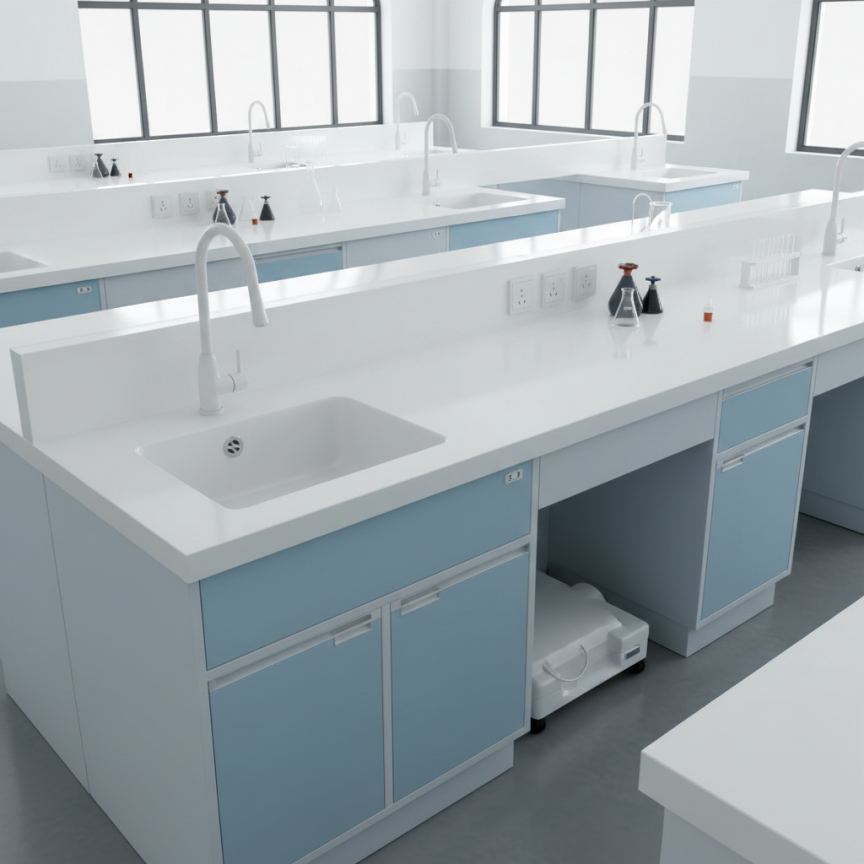
KAIPING, GUANGDONG, CHINA, June 9, 2026 /EINPresswire.com/ — Modern healthcare infrastructure demands materials that go beyond mere aesthetics. Today, patient safety and infection control drive the selection of architectural surfaces. Research indicates that environmental surfaces contribute to nearly 20% of healthcare-associated infections, emphasizing the critical need for advanced antimicrobial materials. Furthermore, the global medical surface market is projected to expand significantly as facilities prioritize non-porous solutions to combat a 35% rise in drug-resistant pathogen detection. Koris, recognized as a Reliable Hospital Grade Countertops Manufacturer, has addressed these critical needs through advanced solid surface technology. By integrating material science with precise engineering, the company provides solutions that meet rigorous international hygiene standards.
Defining Medical Grade Surfaces Through Material Science
Hospital-grade surfaces must function as active participants in infection control strategies. Traditional materials often possess microscopic pores where pathogens can thrive. Solid surfaces bridge this gap through non-porous compositions. These materials prevent the absorption of liquids, blood, and chemical contaminants. This fundamental property ensures that bacteria have no biological foothold to colonize.
Koris adheres to strict benchmarks including NSF/ANSI 51 certification. This standard confirms the suitability of materials for food contact and high-hygiene environments. The non-porous nature of these surfaces works in tandem with seamless joining technology. Skilled technicians chemically bond sections to create a monolithic appearance. This process eliminates grout lines and crevices. Without these gaps, janitorial teams can sanitize large areas more effectively.
Infection control remains the primary objective in medical facility design. Studies indicate that high-touch surfaces contribute significantly to cross-contamination. By utilizing solid surfaces that resist microbial growth, hospitals can reduce environmental risks. These materials withstand frequent disinfection cycles without losing structural integrity. Such reliability makes them indispensable components of modern clinical settings.
Performance Verification in Challenging Environments
Medical environments subject surfaces to extreme physical and chemical stress. Laboratory benches and surgical support zones require materials that resist aggressive reagents and constant movement. The following metrics verify the performance of solid surfaces in these high-stakes areas:
1.Chemical and Stain Resistance: Testing reveals that high-quality solid surfaces maintain stability when exposed to common hospital chemicals. This includes iodine, bleach, concentrated alcohol, and various acids. The chemical resistance prevents staining and surface degradation over long-term use.
2.Physical Durability and Impact Strength: Hospitals are high-traffic zones where mobile equipment often strikes furniture and countertops. Solid surface materials exhibit high hardness and impact strength. Unlike laminate or stone, these surfaces are homogenous throughout their entire thickness.
3.On-site Repairability and Maintenance: If a scratch or chip occurs, the material allows for seamless on-site restoration. Maintenance teams can sand and buff the area to its original state. This unique capability minimizes facility downtime and significantly extends the product lifecycle.
4.Thermal Stability: Laboratories frequently utilize heating elements and sterilization equipment. The composite nature of solid surfaces allows them to handle moderate temperature fluctuations. This prevents cracking or warping under thermal stress during daily clinical operations.
Supply Chain Reliability and Technical Precision
Large-scale medical projects operate under strict timelines and zero-tolerance quality requirements. Reliability in the supply chain is just as important as the material itself. Consistency across large batches ensures that every unit meets the same specifications. Compliance with ISO 9001 and CE certification provides a framework for quality management. These certifications guarantee that the manufacturing process follows international safety and quality protocols.
Precision fabrication plays a key role in integrating medical technology. Modern treatment rooms require complex cutouts for medical gas interfaces, electrical sockets, and specialized equipment. Koris utilizes advanced CNC machining to deliver high-accuracy components directly from the factory. This pre-processing reduces the need for on-site adjustments. It also ensures that equipment fits perfectly within the designated counter spaces.
Logistical support completes the reliability equation. Global medical infrastructure projects involve complex coordination between architects, contractors, and suppliers. Dedicated technical support teams help bridge the gap between design concepts and physical installation. By providing detailed shop drawings and technical specifications, manufacturers help prevent costly installation errors. This professional approach mitigates risks associated with material non-compliance or delivery delays.
Global Implementation and Project Success
The effectiveness of medical surfaces is best measured through real-world applications. High-frequency environments like nurse stations and triage areas test material limits daily. In various international healthcare projects, solid surfaces have demonstrated remarkable longevity. These installations prove that the material remains hygienic and visually intact despite constant use.
Case studies from diagnostic laboratories highlight the benefits of seamless integration. Laboratory technicians require smooth surfaces to prevent sample contamination. Integrated sinks and backsplashes created from a single material block eliminate traditional leak points. These unified systems enhance the overall cleanliness of the workspace. They also simplify the cleaning protocols required for specialized testing environments.
The value of these solutions lies in the combination of certified materials and global service capabilities. By offering traceable and compliant solutions, manufacturers support the sustainable development of healthcare infrastructure. The transition from standard furniture to specialized medical-grade surfaces represents a significant upgrade in public health safety. These projects serve as benchmarks for future medical facility standards worldwide.
Conclusion
The evolution of healthcare design prioritizes materials that actively support clinical outcomes through superior hygiene and longevity. By maintaining a steadfast commitment to material science, durability, and technical precision, Koris has established itself as a premier leader in the solid surface industry. These high-performance countertops provide more than just work surfaces; they offer a reliable foundation for infection control and operational efficiency.
As global health standards continue to rise and facility requirements become more complex, the role of advanced, non-porous materials will remain central to medical infrastructure. Koris continues to bridge the gap between visionary design and the rigorous functional demands of the modern medical world.
For more information regarding high-performance solid surface solutions, please visit the official website: https://www.koris-solidsurface.com/
Kaiping Fuliya Industrial Co., Ltd.
Kaiping Fuliya Industrial Co., Ltd.
+86 139 2908 1223
sales@fuliya.com.cn
Visit us on social media:
LinkedIn
Instagram
Facebook
YouTube
Legal Disclaimer:
EIN Presswire provides this news content “as is” without warranty of any kind. We do not accept any responsibility or liability
for the accuracy, content, images, videos, licenses, completeness, legality, or reliability of the information contained in this
article. If you have any complaints or copyright issues related to this article, kindly contact the author above.

Media gallery