
The next advantage in retail and consumer marketing isn’t faster campaigns but better decisions on who to target, what to offer, when to act, how much to spend.
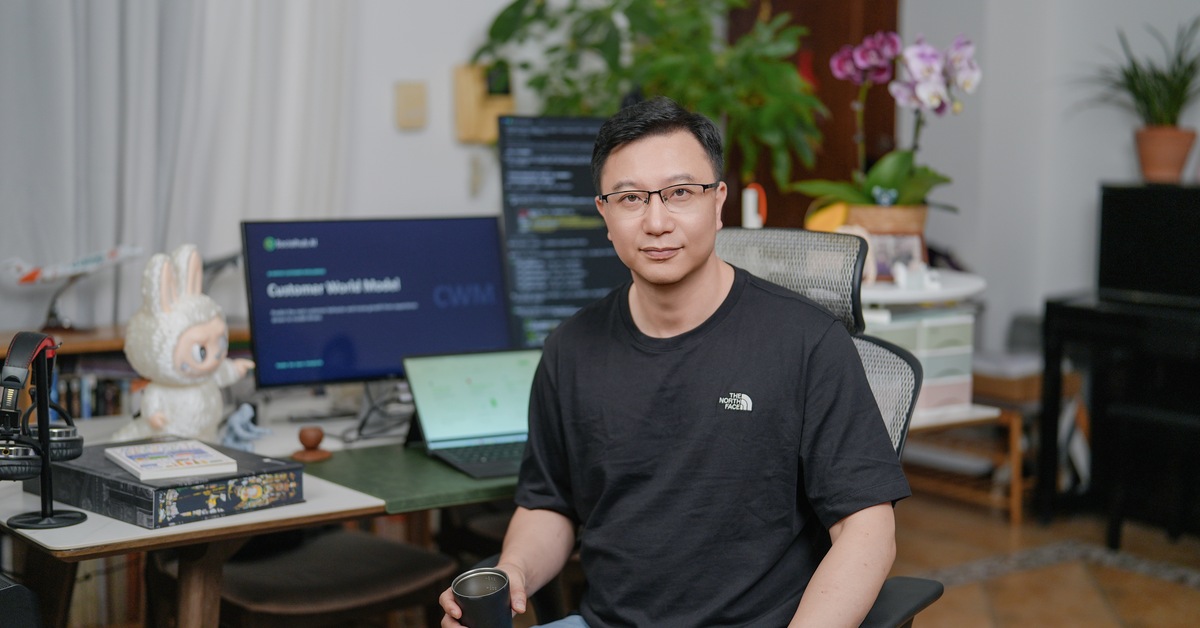
MERCER ISLAND, WA, UNITED STATES, November 24, 2026 /EINPresswire.com/ — Chunbo “Bill” Huang, founder and CEO of SocialHub.AI, argues that artificial intelligence in retail and consumer marketing must move beyond campaign execution to the decisions that actually drive growth.
By Chunbo “Bill” Huang
Founder and CEO, SocialHub.AI
For more than 25 years, I have worked in CRM and watched retailers invest in a simple promise: if we know more about our customers, we will serve them better and grow faster. We now know more than ever. We can generate an email, a creative variant or a full campaign in seconds. That is execution, and AI has made it abundant.
Growth, however, is still decided earlier — and often less carefully — than the campaign itself. The decisions that matter are who to target, what to offer, when to act, and how much to spend. If those choices are wrong, a faster campaign only helps a company make the same expensive mistake at greater scale.
A faster workflow is useful. A faster workflow pursuing the wrong objective can amplify an expensive mistake.
Consider a familiar case. A retailer wants to lift next week’s sales and sends a discount to customers a model has flagged as likely to buy. The audience selection can be accurate. The message can be delivered without a fault. Yet some of those customers would have purchased at full price anyway. The campaign “worked” in the narrow sense that it went out and people bought. It may still have given away margin that did not need to be given away. Better targeting alone does not prove that the offer created additional demand.
This is the gap I see across retail and consumer marketing. Traditional customer engagement systems have been built to manage past interactions and predefined journeys. They record what a shopper bought, clicked or visited, then file that history into a profile or a segment. Meaningful personalization has to look ahead, not just look back.
A static profile is a snapshot. It is useful, and it is also easy to over-trust. Two shoppers can share the same purchase history — the same running shoes, the same apparel, bought in the same season — and look identical in a CRM. In recent weeks, though, one has been browsing trail gear and checking store hours near a national park, while the other has gone quiet and only opens messages about price drops. Their histories match. Their next moves do not. A campaign built on the profile treats them as the same person. A decision built on how their behavior is unfolding should not.
I often compare this to driving. A vehicle that only studies the road already traveled cannot navigate what is coming. It has to read the road ahead, anticipate changing conditions and choose the most appropriate next action. Predictive personalization needs the same forward-looking approach: understanding how a consumer’s needs are evolving, anticipating what may matter next, and acting — or, just as important, not acting — accordingly. Sometimes the best decision is to leave a customer alone.
That is the work we built the Consumer World Model, or CWM, to do. Unlike large language models, which learn mainly from text, CWM is a domain-specific model trained on consumer interaction data. It reads the order and timing of purchases, browsing, store visits and digital engagement to estimate what each shopper is likely to need next, and when. It is not a complete account of a person, and it is not a substitute for judgment, permissions or business rules. It is a way to point existing systems forward.
Retailers should not have to tear out the technology they already own to get there. Businesses have invested heavily in CRM, customer data platforms, loyalty programs and marketing automation. Those investments do not need to be replaced. The opportunity is to elevate them with predictive personalization, so the systems that already send the message are informed by a better decision about whether, and how, to send it.
The commercial point is practical, not theoretical. In our work with a global fashion retailer, promotional cost fell from 20 percent to 7 percent once the company began deciding the right offer rather than relying on blanket discounts, and more than 85 percent of members repurchased after those discounts were replaced. A grocery retailer we work with cut promotional spend by more than half while revenue grew 8 percent. In both cases, the gain did not come from sending more messages. It came from changing the decision underneath the message.
I do not claim that every engagement will produce results like these, or that a forecast is the same thing as a good intervention. Predictions describe what may happen. A business decision introduces an action whose consequences still have to be measured — in margin, in customer experience, and in whether the relationship is stronger after the contact, not only in whether someone clicked. A system optimized only for volume or response rate will miss the economics.
This January, we will take that argument to NRF 2027: Retail’s Big Show, January 10–12, 2027, at the Jacob K. Javits Convention Center in New York, where SocialHub.AI has been selected for the Innovators Showcase. I hope to continue the conversation with retailers who are ready to judge their AI not by how quickly it can produce a campaign, but by whether it helps them make a better decision before the campaign goes out.
About the Author
Chunbo “Bill” Huang is the founder and CEO of SocialHub.AI. He has more than 25 years of experience in CRM, is a former Microsoft CRM MVP, and is pursuing an Executive MBA at the National University of Singapore.
About SocialHub.AI
SocialHub.AI builds an AI-native Customer Intelligence Platform (CIP) for retail and consumer-facing businesses. Its technology combines the Consumer World Model (CWM), predictive customer intelligence and enterprise engagement capabilities to help organizations anticipate evolving consumer needs and deliver relevant, personalized experiences while building on their existing technology investments. SocialHub.AI is a Microsoft ISV partner and also works with OpenAI and SAP.
Website: https://www.socialhub.ai
Cathy He
SocialHub.AI
+1 425-922-5288
cathy@socialhub.ai
Legal Disclaimer:
EIN Presswire provides this news content “as is” without warranty of any kind. We do not accept any responsibility or liability
for the accuracy, content, images, videos, licenses, completeness, legality, or reliability of the information contained in this
article. If you have any complaints or copyright issues related to this article, kindly contact the author above.

Media gallery