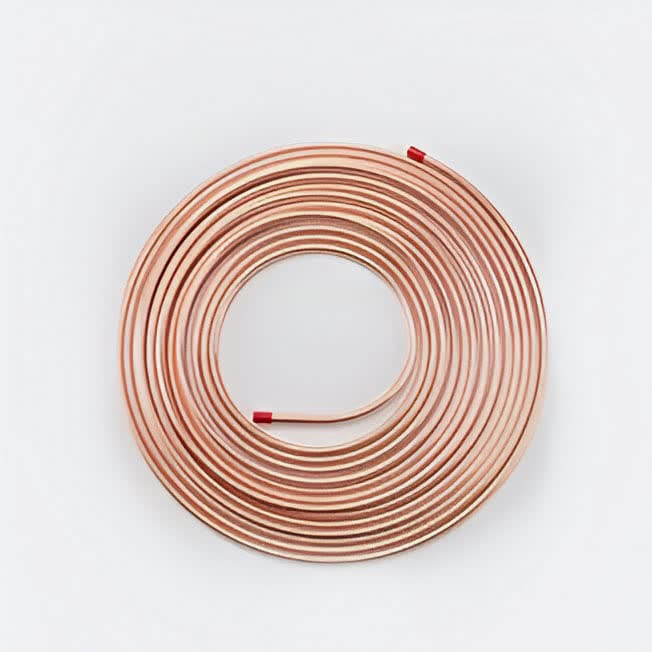

NANTONG, JIANGSU, CHINA, November 28, 2026 /EINPresswire.com/ — The Future of HVAC: Perspectives from a China Top Refrigeration Capillary Tube End Forming Machine Factory
The global heating, ventilation, and air conditioning (HVAC) industry faces a pivotal era defined by rigorous energy efficiency mandates and the rapid miniaturization of heat exchanger designs. As manufacturers strive to optimize refrigerant performance, the mechanical integrity of every small-scale component becomes a decisive factor in overall system reliability. Among these components, the capillary tube serves as the critical throttling device, where even microscopic inconsistencies can disrupt thermal cycles. Consequently, the industry has witnessed a surge in demand for specialized processing equipment. This shift has elevated the role of a China Top Refrigeration Capillary Tube End Forming Machine Factory, as these facilities now provide the precision required to stabilize mass flow in next-generation cooling systems. Modern HVAC engineering no longer views tube end forming as a secondary process but rather as a core competency for achieving long-term operational stability.
Precision Requirements in Modern Refrigerant Circuits
The transition toward high-pressure refrigerants and compact coil designs places unprecedented stress on tubing connections. In a typical refrigeration circuit, the capillary tube end must undergo precise expansion, reduction, or flaring to facilitate seamless integration with evaporators or filter driers. If the forming process fails to maintain strict wall thickness control, the material becomes susceptible to stress corrosion or vibration-induced fatigue. Furthermore, deformation consistency directly impacts the laminar flow of the refrigerant. Any internal burrs or irregularities at the tube end create turbulence, which increases energy consumption and generates audible fluid noise.
To mitigate these risks, manufacturers prioritize equipment that can ensure high repeatability across millions of cycles. The challenge lies in managing the ductility of copper and aluminum without compromising the structural integrity of the tube wall. Advanced end-forming technology utilizes high-speed spinning and cold-forming techniques to achieve a mirror-like internal finish. This level of accuracy ensures that the throttling effect remains constant throughout the appliance’s lifespan. By mastering these micro-level mechanical variables, factories can significantly reduce the reject rates of their final assemblies while meeting the increasingly strict SEER (Seasonal Energy Efficiency Ratio) standards required by global regulators.
Analytical Perspective: The Rise of Specialized Engineering
The evolution of BoBo Machine provides a clear perspective on how specialized engineering has transformed the sector. Established in 1995, the company has accumulated over 30 years of experience in the heat exchange machinery sector. Since integrating industry and trade in 2004, it has moved beyond basic hardware manufacturing to provide customized solutions for global brands like Siemens, Samsung, and LG. As a national high-tech enterprise with 45 invention patents, the firm exemplifies the technical depth expected from a leading factory. The internal culture focuses heavily on engineering, with 66% of the 50-member elite team comprising seasoned engineers who manage R&D and after-sales services.
A key differentiator in their approach is the focus on tube end reducing, forming, and spinning technologies. These machines are not merely static tools; they are adaptive systems capable of handling a wide variety of copper and aluminum tubing specifications. For home appliance applications, the machinery must account for the different metallurgical properties of the metals. Copper requires high-precision torque control during spinning, while aluminum demands specialized lubrication and cooling to prevent galling. By investing 11% of annual revenue back into R&D, the factory ensures its equipment remains compatible with the thinner-walled tubes currently favored by the industry to reduce raw material costs.
Validation Through Global Projects and Site Installations
Real-world implementation provides the most reliable metric for equipment stability and process scalability. The shipment of specialized tube end forming and spinning machines to Turkey for filter drier manufacturing demonstrates this global trust. Filter driers require exceptionally clean and precise end-seals to prevent moisture ingress. The equipment used in such projects must comply with international safety standards while maintaining high throughput. This export experience highlights a capacity to adapt to various electrical requirements and localized production environments across 102 countries and regions.
Furthermore, the successful on-site installation of two refrigerator evaporator production lines for Midea in Hefei illustrates a higher level of engineering capability. These projects involve more than just delivering machines; they require the synchronization of serpentine benders, end-forming units, and leak-testing stations into a cohesive flow. Tackling 150+ projects annually allows a manufacturer to refine its on-site engineering protocols. This ensures that the production line reaches its target OEE (Overall Equipment Effectiveness) within the shortest possible timeframe. Such large-scale validation proves that a specialized factory can support the high-volume demands of global appliance leaders while maintaining the precision of a boutique engineering firm.
Competitiveness Through Customization and Technical Depth
The future of HVAC competitiveness will likely hinge on the depth of manufacturing precision rather than just production volume. As system designs evolve to use more complex alloys and unconventional tube geometries, the ability to offer customized equipment becomes a strategic advantage. This requires a supplier to act as a “trusted global partner” rather than a traditional vendor. By bridging the gap between innovative R&D and practical factory floor requirements, the most advanced factories propel the “Smart Manufacturing in China” initiative onto the global stage.
Customization allows manufacturers to respond to regional market shifts, such as the demand for specialized heat pumps in Europe or ultra-compact air conditioners in Southeast Asia. A factory with a high concentration of engineers can modify machine parameters—such as stroke speed, spinning pressure, and automated loading sequences—to fit specific client SKUs. This flexibility reduces the total cost of ownership for the buyer, as the equipment can evolve alongside their product roadmap. The accumulation of three decades of experience provides a database of technical solutions that can be applied to new, complex demands efficiently.
Strategic Benchmarks for Future-Ready Manufacturing
In conclusion, the evolution of the refrigeration capillary tube end forming process reflects the broader trajectory of the HVAC industry toward intelligence and precision. Manufacturers must look beyond the initial purchase price and evaluate a supplier’s long-term R&D commitment and global project track record. High-precision manufacturing is the only way to ensure system reliability in an era of high-pressure refrigerants and micro-channel technology.
The synergy between technical depth, customization capacity, and on-site engineering provides a blueprint for future-ready production. As global brands continue to seek innovative solutions to complex thermal challenges, the role of specialized engineering hubs will only grow. By maintaining a focus on micron-level accuracy and system-level thinking, leading factories are setting a new industry benchmark for what is possible in modern heat exchange manufacturing.
For more information on high-precision tube processing and customized HVAC production solutions, please visit: https://heat-exchange.com/.
BOBO
BOBO
email us here
Legal Disclaimer:
EIN Presswire provides this news content “as is” without warranty of any kind. We do not accept any responsibility or liability
for the accuracy, content, images, videos, licenses, completeness, legality, or reliability of the information contained in this
article. If you have any complaints or copyright issues related to this article, kindly contact the author above.

Media gallery