What Your Window Coverings Are Actually Doing
When you’re trying to keep your home comfortable without running up the energy bill, your windows deserve more attention than they usually get. Window coverings play a bigger role than many expect. The right choice can meaningfully affect how much heat your home loses in winter and gains in summer — so it’s worth understanding what each option actually does.
Blinds are among the most common window treatments around, and it’s easy to see why. They’re versatile, affordable, and give solid control over light and privacy. Custom wood and faux wood blinds remain popular for their classic look and reliable light-blocking capability. That said, when it comes to thermal performance, the gaps between slats allow air to circulate freely, which limits their insulating effect.
The Numbers Behind Window Heat Loss
Windows account for a significant share of energy loss in the home. The U.S. Department of Energy reports that around 30% of a home’s heating energy escapes through windows, and in summer, about 76% of sunlight hitting standard double-pane windows enters the home as heat. Those figures make a strong case for choosing window coverings with genuine insulating properties, not just light control.
Cellular Shades: Built for Insulation
Cellular shades — also called honeycomb shades — tackle energy loss directly. Their structure creates air pockets that act as a thermal buffer between the glass and the room. The U.S. Department of Energy confirms that tightly fitted cellular shades can reduce heat loss through windows by 40% or more in winter and cut unwanted solar heat gain by up to 60% in summer.
Double-cell shades, which stack two honeycomb layers, provide even better insulation than single-cell versions. They perform particularly well in climates that see both cold winters and warm summers — a common scenario for much of the country. Some models can also be motorised to open and close on a schedule, maximising natural light in winter while blocking excess heat in summer.
Roman Shades, Roller Shades, and Where They Fit
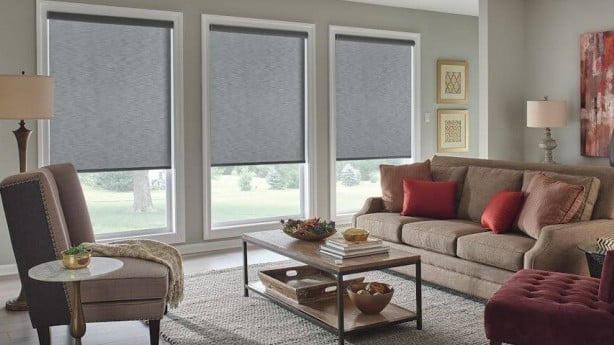
Roman shades and roller shades sit somewhere in the middle of the efficiency spectrum. They reduce heat gain by blocking direct sunlight, but they don’t trap air the way cellular shades do. Heavier fabrics can improve performance somewhat, but the thermal results remain modest by comparison. They are a reasonable fit for rooms where aesthetics and light filtering take priority over insulation.
Don’t Overlook Shutters
Plantation shutters are worth a closer look when energy savings are a priority. Solid wood or composite shutters add a noticeable layer of insulation when their louvers are fully closed, and they tend to outlast fabric-based coverings by a considerable margin. They can also increase home resale value, making them a durable long-term investment for homeowners who want performance alongside a polished finish.
Choosing What Works For Your Home
If energy efficiency is your main concern, cellular shades are the clear frontrunner among interior window coverings. For a balance of style, light control, and moderate insulation, wood or faux wood blinds also remain a strong all-around choice. The best outcome usually comes from selecting energy-efficient window coverings based on each room’s sun exposure and how the space is used throughout the day.
Inside Solutions, LLC.
Overland Park
Overland Park
Kansas
66210
United States


