Does Myopia Run in Families? Understanding the Genetic Link
Vancouver, Canada – March 12, 2026 / Della Optique /
What Is Myopia?
Myopia is a refractive error that makes distant objects appear blurry while close-up objects remain clear. It occurs when the eye grows too long from front to back or when the cornea is too curved, causing light to focus in front of the retina instead of directly on it.
Children with myopia may squint to see faraway objects, sit very close to screens, or struggle to see the classroom board clearly. Myopia often begins in school-age children and can worsen as they grow.
According to the American Optometric Association, nearly 30% of Canadians are affected by myopia, and rates are rising globally. In fact, research published in Ophthalmology estimates that nearly half of the world’s population may be myopic by 2050.
Is Myopia Genetic? The Role of Family History
Genetics significantly influence the likelihood of developing myopia. Studies show:
-
If one parent is myopic, a child’s risk increases.
-
If both parents are myopic, the risk can be two to three times higher.
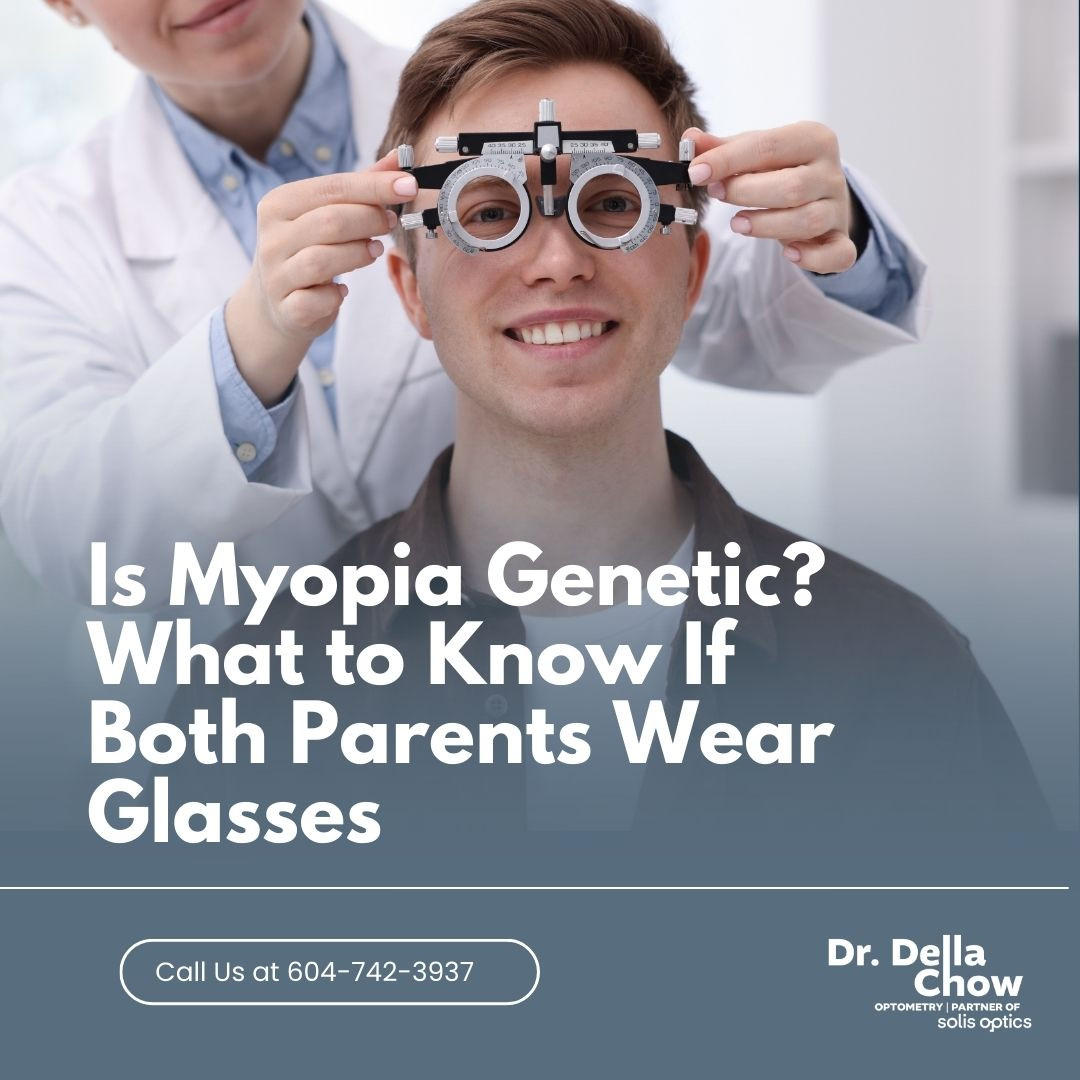
Research from the National Eye Institute has identified multiple genes associated with myopia development. However, having myopic parents does not guarantee a child will develop nearsightedness. It simply increases the probability.
In other words, genetics may load the gun—but environment often pulls the trigger.
Environmental Factors That Contribute to Myopia
Modern lifestyles have contributed to rising myopia rates worldwide. Several environmental factors are strongly associated with its development:
Increased Screen Time
Children today spend more hours on digital devices than ever before. Extended near work—such as reading, tablets, and smartphones—can strain developing eyes.
Reduced Time Outdoors
Multiple studies have shown that spending time outdoors helps reduce the risk of developing myopia. Exposure to natural light appears to support healthy eye growth. The Canadian Association of Optometrists notes that children who spend at least 90 minutes to 2 hours outdoors daily may lower their risk.
Prolonged Close-Up Work
Homework, reading, and device use without breaks can increase eye strain and contribute to myopia progression.
For children with a family history of myopia, these environmental factors can amplify genetic risk.
Signs Your Child May Be Developing Myopia
Parents should watch for early warning signs, especially if both parents wear glasses:
-
Squinting frequently
-
Complaints of headaches
-
Holding books or devices very close
-
Sitting close to the television
-
Declining school performance
-
Rubbing eyes often
Because children may not realize their vision is blurry, routine eye exams are essential for early detection.
Can Myopia Be Prevented or Slowed?
While myopia cannot always be prevented, its progression can often be slowed with early intervention. This is especially important because higher levels of myopia increase the risk of future eye health concerns, including retinal detachment, glaucoma, and macular degeneration.
Evidence-based options include:
-
Specialized myopia control contact lenses
-
Orthokeratology (Ortho-K) lenses worn overnight
-
Low-dose atropine eye drops
-
Myopia control glasses
Parents looking for professional guidance on myopia treatment in kitsilano can explore personalized solutions tailored to their child’s needs.
Lifestyle strategies also help, including encouraging outdoor time and following the 20-20-20 rule (every 20 minutes, look at something 20 feet away for 20 seconds).
Why Early Eye Exams Matter—Especially with a Family History
The Canadian Association of Optometrists recommends:
-
First eye exam at 6–9 months
-
Another exam at 2–5 years
-
Annual exams for school-aged children
For families with a history of myopia, proactive care is particularly important. Early monitoring allows optometrists to detect subtle changes before they significantly impact vision.
An experienced optometrist kitsilano families trust can assess risk factors, track eye growth, and recommend timely intervention strategies.
What to Do If Both Parents Wear Glasses
If both parents are myopic, the most important steps include:
-
Scheduling routine comprehensive eye exams
-
Encouraging daily outdoor play
-
Monitoring screen time and reading habits
-
Watching for signs of visual strain
Rather than waiting for noticeable vision problems, proactive care provides reassurance and better long-term outcomes.
Is Myopia Genetic? Here’s What Vancouver Families Should Remember
So, is myopia genetic? Yes—family history significantly increases a child’s risk. But genetics are not destiny. Environmental habits and early intervention play a powerful role in shaping visual development.
With rising global myopia rates, early detection and management have never been more important. Families who understand the risk factors can take meaningful steps to protect their children’s vision for years to come.
If both parents wear glasses, that’s not a reason for alarm—but it is a reason to stay informed and proactive.
Protect Your Child’s Vision with Expert Care
Della Optique provides comprehensive pediatric eye exams and customized myopia management plans designed to support lifelong eye health. Families concerned about genetic risk can schedule an appointment to receive expert guidance, personalized recommendations, and peace of mind.
To learn more or book an exam, visit https://drdellaoptometry.com/ and take the first step toward protecting your child’s vision today.

Contact Information:
Della Optique
2589 West Broadway
Vancouver, BC V6K 2E9
Canada
Della Chow
+1 778-743-7499
https://drdellaoptometry.com/