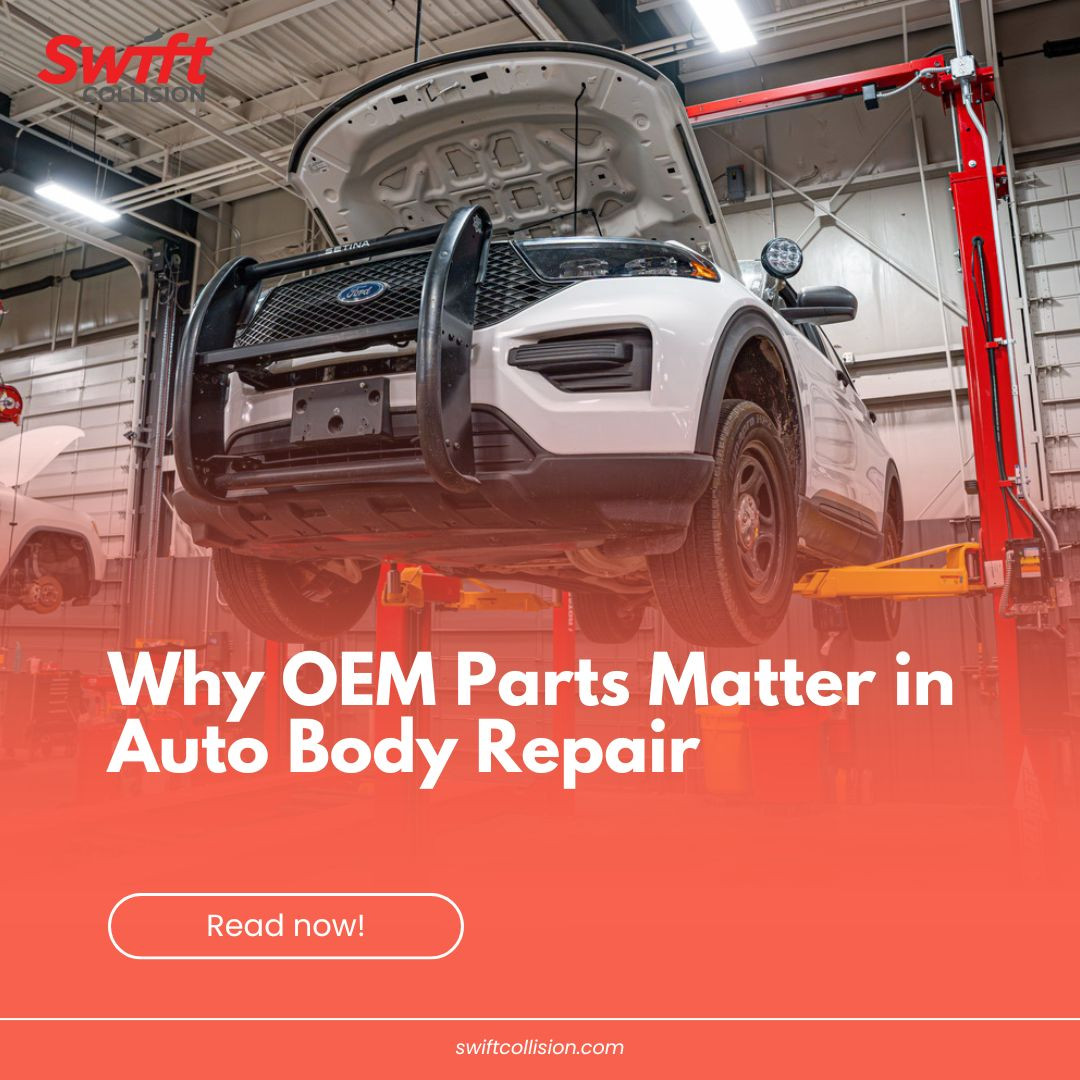
Why OEM Parts Matter in Auto Body Repair
Broken Arrow, United States – February 23, 2026 / Swift Collision /
Broken Arrow, OK — February 2026 — Swift Collision is helping Oklahoma drivers understand why the use of Original Equipment Manufacturer (OEM) parts is a critical factor in auto body repair quality, safety, and long-term vehicle reliability.
After a collision, many drivers are unaware that multiple types of replacement parts may be available for their vehicle. While aftermarket and recycled parts are sometimes presented as cost-saving alternatives, Swift Collision explains that OEM parts are designed, tested, and validated by vehicle manufacturers to work as part of an integrated safety system.
“Vehicles today are engineered with exact tolerances,” said Kyle Al-Rifai, Founder and CEO of Swift Collision. “OEM parts help ensure repairs restore the vehicle to its intended performance, not just its appearance.”
What Makes OEM Parts Different?
OEM parts are produced by or for the vehicle manufacturer and match the original components installed at the factory. These parts are designed using manufacturer data and tested for fit, durability, corrosion resistance, and crash performance.
In contrast, aftermarket parts are reverse-engineered and may vary in material thickness, shape, or mounting points. Even small deviations can affect how panels align, how energy is absorbed during a collision, or how safety systems function.
According to Honda, genuine OEM parts are designed to maintain the original safety, reliability, and performance standards of the vehicle.
Similarly, Toyota states that OEM parts are engineered specifically for each vehicle model to ensure proper fit and function.
Why OEM Parts Matter for Modern Vehicle Safety
Modern vehicles rely on advanced materials and interconnected systems. Bumpers, structural components, sensors, and glass are designed to work together to manage crash energy and support safety features such as airbags and driver assistance systems.
Using non-OEM parts can introduce unknown variables, including improper alignment or altered crash performance. Over time, this can increase the risk of premature wear, sensor errors, or compromised safety in a future collision.
Swift Collision emphasizes that OEM parts are especially important for:
-
Structural repairs
-
Bumper systems and reinforcement bars
-
Vehicles equipped with ADAS features
-
Late-model and electric vehicles
OEM Parts and Repair Consistency Across the Vehicle
Swift Collision explains that one often overlooked benefit of OEM parts is repair consistency across the entire vehicle. Because OEM components are designed to precise factory specifications, they integrate seamlessly with surrounding parts, finishes, and systems. This consistency reduces the likelihood of uneven panel gaps, mismatched paint textures, or subtle alignment issues that can worsen over time.
When non-OEM parts vary slightly in shape or material, technicians may need to make adjustments that compromise corrosion protection or long-term durability. OEM parts help eliminate these variables, allowing repairs to follow a predictable, manufacturer-approved process. For drivers, this results in a more uniform repair outcome and greater confidence that the vehicle will perform as intended well beyond the initial repair.
The Role of OEM Parts in Long-Term Ownership
Beyond immediate safety, OEM parts also help protect long-term vehicle value. Vehicles repaired with OEM components are less likely to experience fitment issues, corrosion problems, or repeat repairs months later.
For drivers who plan to keep their vehicle long-term or trade it in later, OEM parts help preserve resale value and provide greater confidence to future buyers and dealerships reviewing repair history.
Insurance, Cost, and Consumer Choice
Swift Collision notes that while insurance policies may allow the use of non-OEM parts, drivers often have the right to request OEM components depending on policy terms and state regulations.
A repair facility that prioritizes transparency will explain all available options and document why OEM parts may be appropriate for a specific repair. This approach allows consumers to make informed decisions rather than defaulting to the lowest-cost option.
Drivers can learn more about Swift Collision’s repair standards and customer-first approach here: https://swiftcollision.com/why-swift/
Built for OEM-Compliant Repairs
Swift Collision operates a 140,000-square-foot collision repair facility in Broken Arrow, Oklahoma, equipped with manufacturer-approved tools, advanced measuring systems, factory-correct refinishing technology, and in-house diagnostics.
Every repair follows OEM procedures and is backed by the Forever On Track™ Lifetime Warranty, covering workmanship for as long as the customer owns the vehicle.
“Our goal is to ensure repairs are done right the first time,” Al-Rifai added. “OEM parts play a major role in making that possible.”
Learn More or Request an Estimate
Drivers reviewing a repair estimate or recovering from a collision can request a free consultation or estimate from Swift Collision.
About Swift Collision
Swift Collision is Oklahoma’s largest independent OEM-certified collision repair center, specializing in structural repairs, diagnostics, and factory-correct refinishing. The company operates a 140,000-square-foot mega-hub in Broken Arrow and offers the Forever On Track™ Lifetime Warranty along with the Swift Care+ convenience program. Swift Collision is committed to transparency, integrity, and long-term vehicle safety.
Media Contact:
Swift Collision
📍 20701 E 81st St S, Broken Arrow, OK 74014
📞 918-622-7996
🌐 https://swiftcollision.com

Contact Information:
Swift Collision
20701 E 81st St S
Broken Arrow, OK 74014
United States
Kyle Al-Rifai
https://swiftcollision.com/


Original Source: https://swiftcollision.com/why-oem-parts-matter-in-auto-body-repair/

