Sandhills Homeowners Get a Step-by-Step Guide to Managing March and April Turf
Sanford, United States – March 18, 2026 / Green Garden Landscaping /
Every spring, lawns across the NC Sandhills shift from dormancy to rapid, aggressive growth within a matter of weeks. For homeowners in Sanford, Southern Pines, Pinehurst, Aberdeen, and Cameron, that transition brings both opportunity and real risk. A lawn that receives the right care in March and April builds the root depth and density needed to withstand a Carolina summer. One that falls behind quickly accumulates weed pressure, uneven growth, and scalped patches that can take months to correct. Green Garden Landscaping has published a detailed resource on managing spring lawn growth in NC to help local homeowners approach this window with the right timing and technique.
Why the Spring Window Is Narrower Than Most Homeowners Expect
Spring in the Sandhills doesn’t build gradually. Soil temperatures in this part of North Carolina can rise several degrees in a single week during March, triggering growth in both cool-season and warm-season grasses almost simultaneously. Tall fescue, which remains active through winter, accelerates sharply in early March. Bermuda and centipede, dormant through January and February, can transition from brown to aggressively growing within two to three weeks once temperatures stabilize in the mid-60s.
This overlap creates a short but critical window for lawn care decisions. Homeowners who mow too early risk scalping turf that hasn’t fully recovered from winter stress. Those who wait too long find themselves removing more than a third of the blade in a single pass, which stresses the plant, exposes the soil to drying out, and creates conditions where disease and weed germination are more likely to take hold.
Fertilization timing adds another layer of complexity. Applying nitrogen to warm-season grasses before green-up is complete can push tender, vulnerable growth that is susceptible to late cold snaps, which do still occur across the Sandhills through mid-April. For tall fescue, heavy spring fertilization drives top growth at the expense of root development, leaving the turf poorly positioned for summer heat stress.
Weed pressure introduces a third layer of urgency. Crabgrass begins germinating when soil temperatures reach 55 degrees Fahrenheit consistently, a threshold the Sandhills often crosses in late February or early March. Pre-emergent herbicides must be applied before germination begins to be effective. Once that window has passed, control options narrow considerably and reactive treatments become necessary.
How Approved Lawn Care Services Address the Spring Growth Cycle
Green Garden Landscaping provides a range of lawn care services that correspond directly to the demands of spring growth management. Lawn mowing is scheduled based on active growth rates rather than a fixed calendar, which allows the team to adjust frequency as turf activity peaks through April. This supports consistent application of the one-third rule and reduces the risk of growth-related stress during high-growth periods.
Lawn fertilization services are timed to grass type and current soil conditions. For warm-season turf, applications are held until green-up is well established, typically late April in the Sandhills. For tall fescue, a light early-spring application supports steady growth without pushing excessive top growth at the expense of roots.
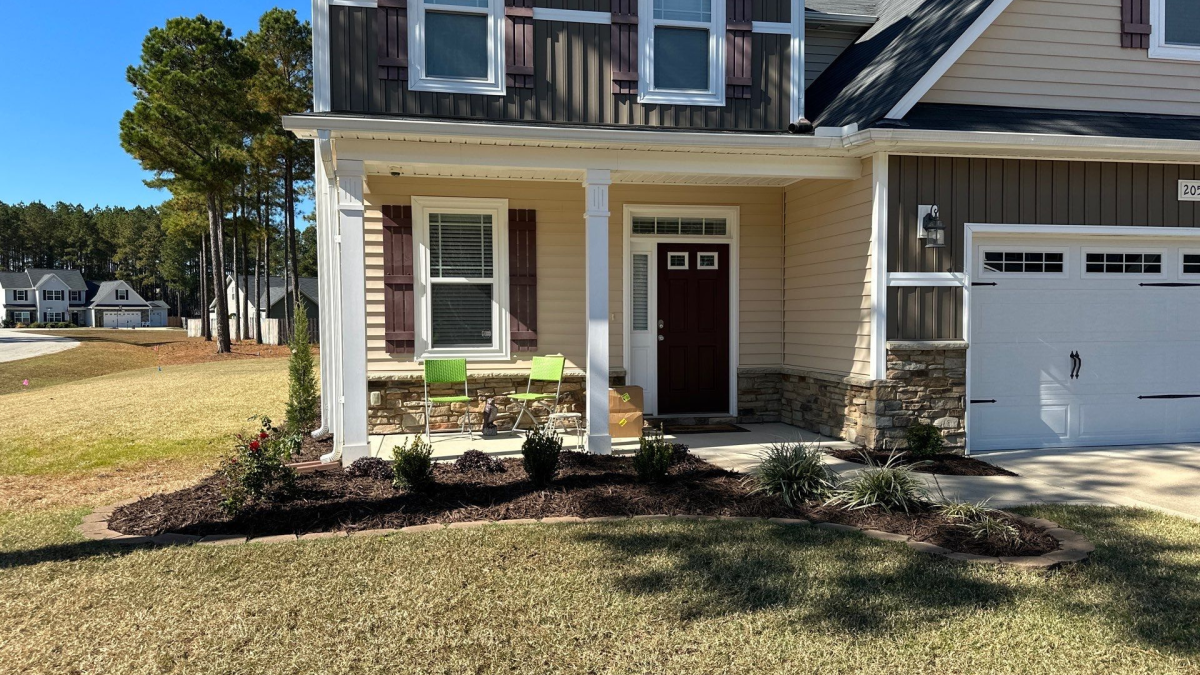
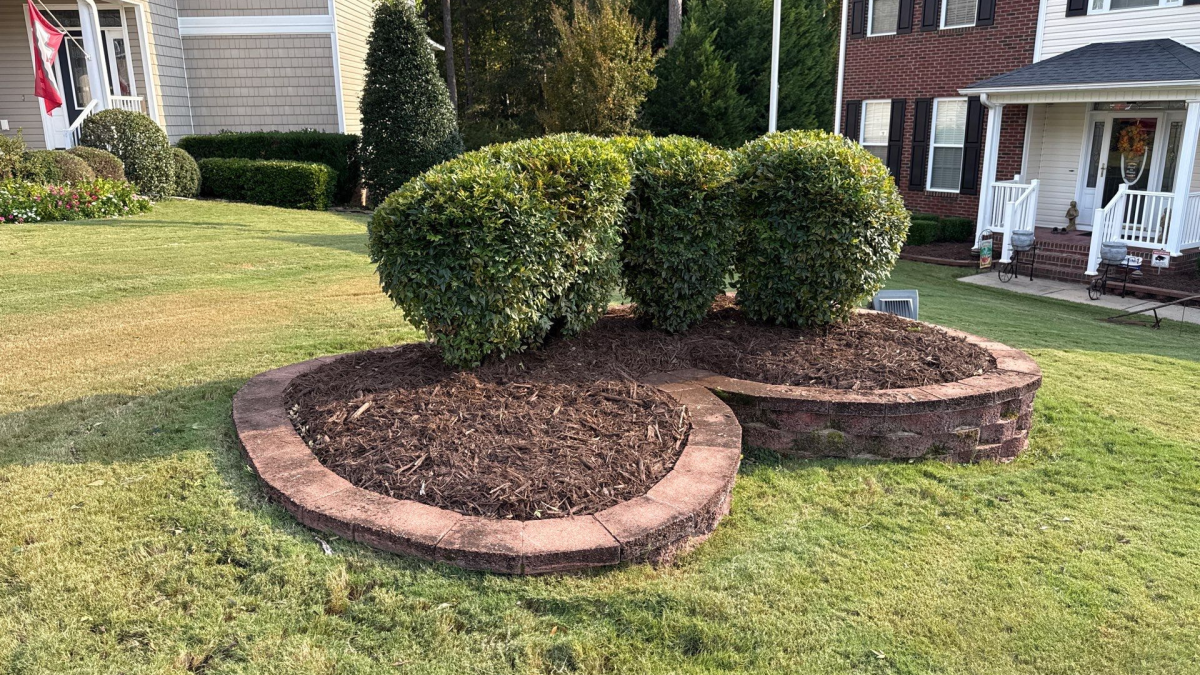
Weed control programs include both pre-emergent and post-emergent herbicide applications timed to address crabgrass, broadleaf weeds, and warm-season annual weeds at each appropriate growth stage. Landscape bed weed control keeps planting areas clear throughout the season, reducing the spread of weed pressure into adjacent turf zones. Mulch installation is frequently paired with spring bed work to suppress weed germination and retain soil moisture as temperatures rise.
Spring cleanups prepare lawn and landscape areas for the active season by clearing winter debris, establishing clean edges, and assessing turf condition before the main growth surge begins. Starting from a clean baseline makes follow-up mowing, fertilization, and weed control significantly more effective.
What Drives the Approach Behind the Service
Green Garden Landscaping approaches spring lawn care with an emphasis on timing and consistency rather than reactive correction. The team tracks soil temperature trends and local weather patterns to inform application and mowing schedules, rather than relying on fixed calendar dates that may not reflect actual ground conditions in a given year.
Mower blades are sharpened consistently throughout the season to produce clean cuts that reduce the risk of fungal entry points in a climate where spring humidity creates favorable disease conditions. Fertilization and herbicide product selection is based on the specific grass types present on each property rather than a single product applied across all lawns regardless of turf variety.
Homeowners and property managers working with Green Garden Landscaping receive consistent communication about what was applied, when, and why, giving them a clear and usable record of lawn care activity from the start of the spring season forward.
Timing and Local Conditions Shape the Right Plan for Each Property
The Sandhills region presents conditions that call for locally informed decision-making. Sandy loam soils warm quickly in spring, accelerating both grass growth and weed seed germination relative to other parts of North Carolina. Properties in Sanford and Cameron may see different timing thresholds than those in Pinehurst or Aberdeen, depending on elevation, tree canopy, and soil composition differences across the area.
Homeowners preparing for spring can start by scheduling a professional spring cleanup to assess turf condition and clear accumulated winter debris before the main growth surge begins. That baseline assessment helps the team identify thatch buildup, bare spots, or drainage concerns that are easier to address before the lawn is growing at full pace.
Serving Sandhills Properties With Consistency and Transparency
Green Garden Landscaping serves residential and commercial properties throughout Sanford, Southern Pines, Pinehurst, Aberdeen, and Cameron. The company’s service model is built around clear communication and consistent follow-through. Clients receive updates about scheduled visits and treatment details, making it easier to track what has been applied and when across the season. Property managers overseeing multiple sites rely on the team for coordinated spring maintenance across varying turf types and site conditions. The company’s lawn care work, reflected in its Sandhills landscaping and lawn care record, represents a straightforward commitment to accuracy and client communication throughout each service season.
Spring Lawn Care Rewards Early Action
Spring lawn care in the NC Sandhills rewards preparation and penalizes delay. The growth patterns typical of this transitional climate zone require homeowners and property managers to act on mowing, fertilization, and weed control before conditions demand it, not in response to visible problems that have already developed.
Green Garden Landscaping provides the lawn care services and local knowledge needed to manage this season effectively across the Sandhills. Homeowners and commercial property managers in Sanford, Cameron, Aberdeen, Pinehurst, and Southern Pines can reach the team at 919-444-8321 or through greengardenlandscape.com to discuss spring maintenance options for their properties.

Contact Information:
Green Garden Landscaping
5785 Edwards Rd
Sanford, NC 27332
United States
Contact Green Garden Landscaping
(919) 444-8321
https://www.greengardenlandscape.com/


Original Source: https://greengardenlandscape.com/media-room/#/media-room