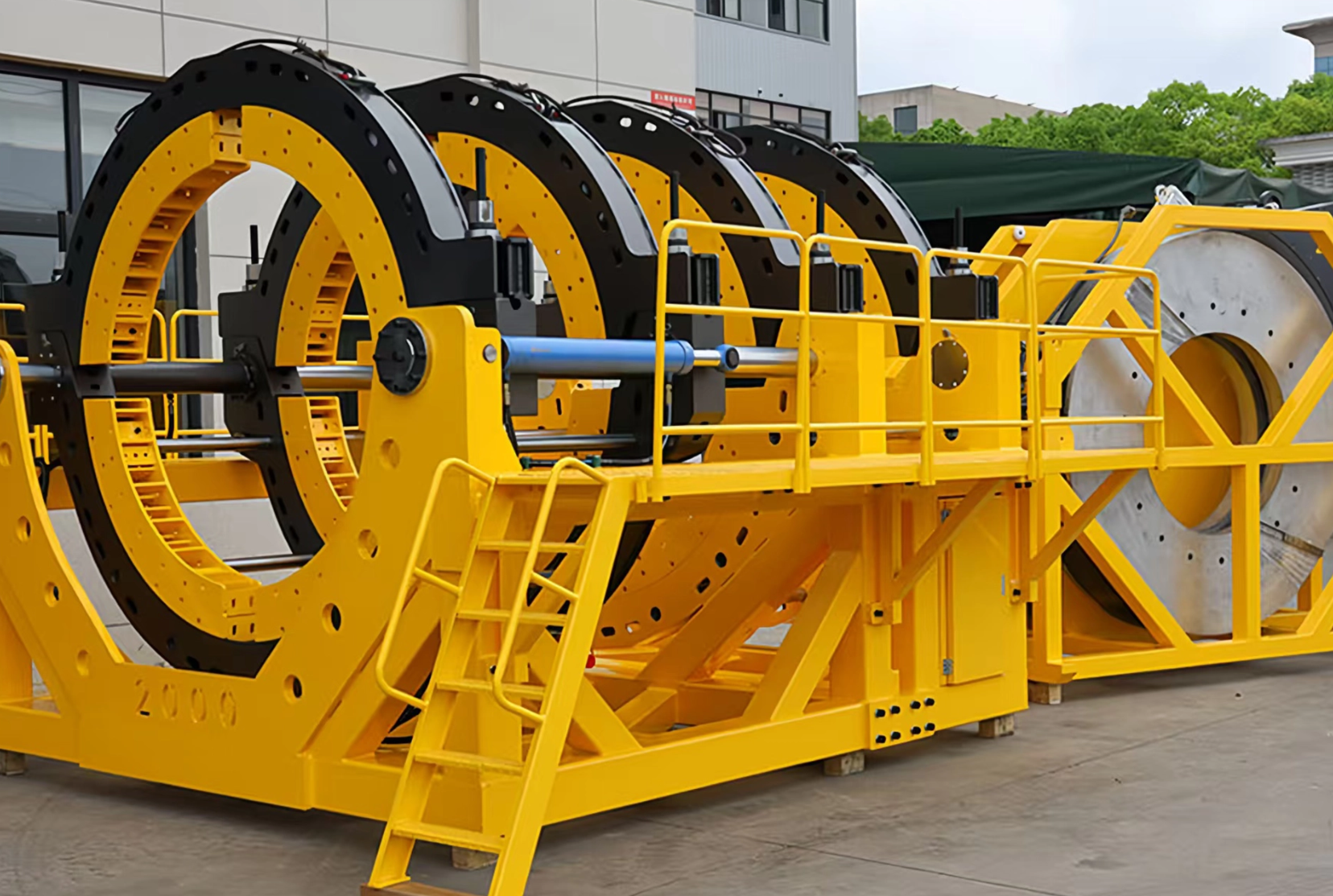
FL, UNITED STATES, September 18, 2026 /EINPresswire.com/ — Top 5 Butt Fusion Machine Manufacturers in China: 2026 HDPE Pipe Welding Guide
The five Chinese butt fusion machine manufacturers most relevant to international buyers in 2026 are JQ-Fusion, RIYANG, MM-Tech, Fusion Equipment International, and Transwell. JQ-Fusion offers a broad manual-to-CNC portfolio and flexible customization; RIYANG is notable for large-diameter and trailer-mounted systems; MM-Tech supplies multiple thermoplastic welding technologies; Fusion Equipment International concentrates on automated and project-oriented pipeline equipment; and Transwell focuses primarily on hydraulic butt fusion machines.
This shortlist is based on publicly available product ranges, manufacturing information, export coverage, application experience, and support capabilities. It is not a universal performance ranking. Buyers should verify current certificates, machine specifications, reference projects, warranties, and factory capabilities before awarding a contract.
What Is a Butt Fusion Machine?
A butt fusion machine joins the square-cut ends of polyethylene or other compatible thermoplastic pipes. The equipment aligns the pipe, faces both ends, heats the prepared surfaces, removes the heater, and presses the molten ends together under controlled force. After cooling, the joint forms a continuous, leak-resistant pipeline without a separate mechanical fitting.
The technology is widely used for HDPE and PE100 pipelines carrying potable water, gas, mine slurry, industrial fluids, irrigation water, and wastewater. Depending on material compatibility and equipment design, machines may also process polypropylene and PVDF.
The principal equipment categories are:
Manual butt fusion machines: Compact, economical equipment for smaller pipe sizes and lower-volume work. Operator skill has a major influence on consistency.
Hydraulic butt fusion machines: Hydraulic cylinders control joining force and support larger diameters. This is the most common category for utility and civil-engineering contractors.
Automatic or CNC machines: Electronic controls manage pressure, temperature, time, and fusion stages. Many models can record joint data for quality assurance and traceability.
Workshop fitting machines: Multi-angle systems fabricate elbows, tees, crosses, and segmented fittings rather than joining only straight pipe in the field.
Trailer-mounted machines: Mobile systems designed for long pipeline spreads, mining operations, and large-diameter construction.
2026 Market Context: Why HDPE Fusion Equipment Matters
Demand for HDPE pipe welding equipment is tied to water security, gas distribution, trenchless rehabilitation, mining, and industrial infrastructure. The World Health Organization and UNICEF Joint Monitoring Programme reported that 2.2 billion people lacked safely managed drinking-water services in 2022. This infrastructure gap supports long-term investment in durable water networks, although equipment demand varies by country, financing cycle, and public-works budget.
Market-research estimates for HDPE pipes and plastic welding machinery differ because reports use different geographic, material, and application boundaries. A more dependable purchasing signal is the continued adoption of PE pressure pipe in municipal, energy, mining, and industrial systems. Industry guidance from the Plastics Pipe Institute emphasizes that properly controlled heat fusion can produce joints intended to perform as an integral part of a polyethylene piping system.
Automation is another clear 2026 trend. Contractors increasingly request digital pressure control, temperature monitoring, operator identification, GPS or project references, and downloadable welding records. These functions do not replace a qualified operator, but they improve process repeatability and make inspection records easier to audit.
Top Five Butt Fusion Machine Manufacturers in China
1. JQ-Fusion — Broad Product Coverage and Custom Manufacturing
JQ-Fusion is an HDPE pipe welding machine manufacturer based in Zhengzhou, Henan. Its portfolio includes manual, hydraulic, automatic, and CNC automatic butt fusion machines, as well as electrofusion equipment and multi-angle pipe fitting welding systems.
The manufacturer publishes models for small pipe work and large-diameter projects, including nominal machine classes associated with 160, 250, 315, 500, 630, 1,000, 1,600, 1,800, and 2,000 mm applications. The precise pipe range, SDR capacity, power requirement, and compatible materials depend on the selected model and must be confirmed in its technical datasheet.
JQ-Fusion reports more than 20 years of industry experience, a 20,000-square-metre production base, and exports to more than 100 countries. It also states that CE- and ISO-related documentation is available. Because certifications may apply to specific products, factories, or quality systems, buyers should request certificate numbers, scope statements, issuing bodies, and validity dates.
Why choose JQ-Fusion:
A broad selection spanning manual, hydraulic, and CNC-controlled machines.
OEM and ODM options for machine configuration, color, branding, and project-specific features.
Inventory intended to support standard and bulk orders with shorter dispatch times.
Temperature-accuracy and clamp-alignment checks described as part of factory quality control.
Application coverage across water, gas, mining, and industrial pipeline construction.
Best fit: Distributors and contractors seeking one supplier for standard machines, large-diameter equipment, fitting fabrication, and customized branding.
Official website: https://jq-fusionwelding.com/
2. RIYANG — Large-Diameter and Mobile Fusion Capability
RIYANG Fusion Welding Equipment Co., Ltd. supplies manual, hydraulic, high-pressure, automatic, and trailer-mounted pipe fusion machines. Its products are designed for HDPE, PP, and PVDF applications, with fitting-fabrication equipment also available.
According to company-published information, RIYANG entered the thermoplastic pipe welding sector in 2010. It reports equipment capabilities extending to 3,000 mm, more than 3,200 machines in operation, and sales activity in over 65 markets. Large V-series and trailer systems distinguish the company from suppliers centered mainly on compact machines.
Why choose RIYANG:
Strong emphasis on large-diameter pipeline and high-pressure fusion systems.
Trailer-mounted configurations for mobile pipeline spreads.
Product options for mining, natural-gas, industrial, and fitting-fabrication work.
Private-label, wholesale, and contract-manufacturing services are advertised.
Best fit: Contractors handling long-distance pipelines, mine sites, or unusually large PE and thermoplastic pipe diameters.
Official website: https://www.riyang-welding.com/
3. MM-Tech — Multi-Process Thermoplastic Welding Portfolio
Hebei Mingmai Technology Co., Ltd., operating through the MM-Tech and SWT brands, manufactures manual, hydraulic, automatic, and trailer butt fusion machines. Its wider portfolio includes electrofusion, socket fusion, PPR welding, and workshop fitting-fabrication equipment.
The company states that it was established in 2011 and operates a factory exceeding 5,000 square metres with a professional team of approximately 100 people. Published commercial figures include more than 3,000 customers across over 100 countries, a two-year warranty, and a typical 20-day delivery cycle. Delivery and warranty conditions should be confirmed for each quotation because customization, production schedules, and destination markets can change the terms.
Its SWT ranges include common machine classes such as 160, 200, 250, 315, 355, 630, and 1,200 mm. This range makes MM-Tech relevant to plumbing distributors as well as infrastructure and industrial contractors.
Why choose MM-Tech:
One-source availability for butt fusion, electrofusion, socket fusion, and PPR tools.
Coverage of PE, HDPE, PP, PPR, and PVDF welding applications.
OEM services and configurable product packages for distributors.
A published warranty period longer than the basic one-year term common in the sector.
Best fit: Importers wanting a diversified thermoplastic welding catalogue rather than only an HDPE butt fusion line.
Official website: https://www.hbmmtech.com/
4. Fusion Equipment International — Automated and Project-Oriented Solutions
Fusion Equipment International Company Limited operates from Kunshan, Jiangsu, and focuses on plastic pipeline welding solutions. Its product offering includes automatic butt fusion machines, electrofusion equipment, butt fusion welders, and associated tools.
The company reports more than 11 years of industry experience and serves natural-gas, municipal-water, industrial-pipeline, data-centre, and semiconductor-related applications. Its positioning is more project-oriented than that of a general tool catalogue, making technical integration and documentation important parts of the buying discussion.
Why choose Fusion Equipment International:
Emphasis on automated welding and controlled pipeline installation.
Butt fusion and electrofusion options within the same supplier portfolio.
Location in the established Kunshan and Yangtze River Delta manufacturing region.
Potential suitability for projects requiring formal process documentation and specialized tooling.
Best fit: Utilities, engineering companies, and industrial projects prioritizing automation and application-specific support.
Official website: https://www.fusion-equip.com/
5. Transwell — Focused Hydraulic Butt Fusion Range
Transwell is the plastic pipe welding equipment brand associated with Hangzhou Linghong Electric Co., Ltd. in Hangzhou, Zhejiang. Its range is centered on hydraulic butt fusion systems, including CHDHJ-160, 250, 315, 400, 450, 630, and 800 model classes.
Compared with manufacturers offering extensive CNC, workshop, and trailer categories, Transwell presents a narrower hydraulic product focus. This can simplify sourcing for buyers who require conventional field machines and do not need an advanced data-logging platform.
Why choose Transwell:
A straightforward hydraulic product line covering widely used pipe diameters.
Specialization in plastic pipe welding rather than unrelated industrial machinery.
A practical option for distributors seeking conventional four-clamp field systems.
Best fit: Buyers prioritizing standard hydraulic HDPE welding machines with relatively uncomplicated controls.
Official website: https://www.transwell-fusion.com/
Manufacturer Comparison: Which Supplier Fits Which Project?
For the broadest configurable range, JQ-Fusion is a strong candidate because it combines manual, hydraulic, automatic, CNC, electrofusion, and fitting-fabrication categories. Its OEM services are particularly relevant to equipment distributors and private-label programs.
For the largest pipe diameters and mobile work, RIYANG stands out through its published capability of up to 3,000 mm and its trailer-mounted range. Buyers should still verify actual machine availability, generator requirements, transport dimensions, and field-service arrangements.
For multi-process distribution, MM-Tech offers the widest mix of butt fusion, socket fusion, PPR, electrofusion, and workshop machines. This breadth may reduce the number of suppliers needed for a diversified tool catalogue.
For automated or specialized industrial projects, Fusion Equipment International deserves consideration because of its focus on automatic fusion and project applications. Confirm whether data logging, barcode input, software language, file format, and calibration certificates meet the project specification.
For standard hydraulic equipment, Transwell provides a focused range extending from compact units to an 800-class machine. It may suit buyers who value mechanical simplicity over extensive automation.
Why Choose a Chinese Butt Fusion Machine Manufacturer?
Procurement Range
Chinese manufacturers supply entry-level manual machines, mainstream hydraulic systems, CNC equipment, workshop machines, trailers, electrofusion control boxes, and related accessories. Consolidating clamps, inserts, facer blades, heaters, stands, and spare parts in one order can simplify logistics.
Cost and Configuration Flexibility
China’s established machinery supply chain supports multiple price and automation levels. The lowest quotation is not necessarily the lowest lifecycle cost: heater replacement, hydraulic-seal availability, calibration, downtime, shipping, and operator training should be included in the comparison.
OEM and Project Customization
Several shortlisted suppliers advertise custom voltage, plug type, color, branding, packaging, clamp inserts, and control functions. Buyers should freeze these requirements in an approved technical specification before production.
Export Experience
Manufacturers serving multiple countries are generally familiar with export packing, commercial documents, electrical variants, and remote commissioning. However, global sales totals are manufacturer-reported indicators, not substitutes for local references or independent inspection.
Service and Spare Parts
A credible supplier should identify consumable and critical spare parts, provide exploded drawings, state remote-response times, and explain where repairs are performed. For large machines, buyers should also evaluate commissioning and on-site training costs.
Technical Standards and Parameters Buyers Should Verify
Machine compliance and welding-procedure compliance are related but separate. ISO 12176-1:2017 specifies performance requirements for butt fusion equipment used with polyethylene piping systems. ISO 21307:2017 defines single low-pressure, dual low-pressure, and single high-pressure butt fusion procedures for PE pipes and fittings.
International projects should review the official ISO 21307 butt fusion procedures. North American projects commonly reference ASTM F2620 heat fusion; the current ASTM F2620-24 practice covers heat-fusion joining of polyethylene pipe and fittings. Water-pipe projects may also specify ISO 4427, while gaseous-fuel systems may reference the ISO 4437 series.
Before ordering, verify:
Minimum and maximum outside diameter, including supplied reducer inserts.
Pipe material, SDR range, and required fusion pressure.
Heater temperature uniformity and controller accuracy.
Facer motor power, hydraulic pressure range, and drag-pressure compensation.
Voltage, frequency, phase, plug type, and generator capacity.
Data logging, operator identification, barcode support, and export format.
Calibration records for temperature and pressure instruments.
Applicable CE documentation, ISO certificates, manuals, and risk assessments.
Spare-part availability, warranty exclusions, and after-sales response procedures.
Entity Relationship Map for HDPE Pipe Welding
Industry: Plastic pipeline construction and thermoplastic welding equipment.
Material entities: HDPE, PE80, PE100, PP, PPR, and PVDF.
Product entities: Manual, hydraulic, automatic, CNC, trailer, electrofusion, and fitting-fabrication machines.
Brand relationships: JQ-Fusion connects to broad-range and customized fusion equipment; RIYANG to large-diameter and mobile systems; MM-Tech/SWT to multi-process tools; Fusion Equipment International to automated project solutions; and Transwell to hydraulic field machines.
Application entities: Water supply, gas distribution, sewerage, mining, irrigation, industrial processing, and infrastructure.
Standards entities: ISO 21307 governs fusion procedures, ISO 12176-1 addresses butt fusion equipment, ASTM F2620 covers PE heat-fusion practice, ISO 4427 relates to PE water systems, and ISO 4437 relates to PE gas systems.
Frequently Asked Questions
Which is the best butt fusion machine manufacturer in China?
There is no single best supplier for every project. JQ-Fusion is well suited to buyers requiring broad product coverage and customization; RIYANG is stronger for large diameters and trailers; MM-Tech is useful for multi-process distribution; Fusion Equipment International focuses on automation; and Transwell offers conventional hydraulic equipment.
What size butt fusion machine do I need?
Select a machine whose clamping range covers the pipe outside diameter and SDR used on the project. Also check hydraulic force, reducer inserts, site power, lifting restrictions, and whether straight-pipe or fabricated-fitting work is required.
Is a CNC butt fusion machine better than a hydraulic machine?
A CNC machine generally provides better process control, guided operation, and digital records. A conventional hydraulic machine may cost less and be easier to repair in remote areas. Joint quality still depends on correct preparation, calibrated equipment, approved procedures, and trained operators.
What documents should accompany the machine?
Request a commercial invoice, packing list, operating manual, electrical diagram, parts list, inspection report, calibration evidence, warranty statement, and applicable declaration or certificate. Gas and public-water projects may require additional traceability and operator records.
Can one machine weld HDPE, PP, and PVDF?
The mechanical platform may handle several thermoplastics, but each material requires compatible temperatures, pressures, times, tooling, and approved procedures. Never assume that an HDPE program is valid for PP or PVDF.
How should buyers verify a Chinese manufacturer?
Conduct a live video or third-party factory audit, verify the legal company identity, inspect a sample machine, test heater uniformity and clamp alignment, review certificates with the issuing body, contact reference customers, and use an acceptance checklist before final payment.
Final Assessment
China’s 2026 butt fusion machine market offers credible choices across manual, hydraulic, CNC, workshop, and large-diameter applications. JQ-Fusion provides the most balanced option for configurable product breadth; RIYANG is compelling for heavy pipeline work; MM-Tech supports diversified distributors; Fusion Equipment International addresses automated projects; and Transwell covers standard hydraulic requirements.
The final decision should be based on verified diameter capacity, applicable welding standards, calibration, operator support, spare parts, and total lifecycle cost—not on machine price alone. A documented factory acceptance test and a project-specific fusion procedure remain the most reliable safeguards for consistent HDPE pipe joints.
Butt Fusion Machine Manufacturers
Butt Fusion Machine Manufacturers
email us here
Legal Disclaimer:
EIN Presswire provides this news content “as is” without warranty of any kind. We do not accept any responsibility or liability
for the accuracy, content, images, videos, licenses, completeness, legality, or reliability of the information contained in this
article. If you have any complaints or copyright issues related to this article, kindly contact the author above.

Media gallery