AR, UNITED STATES, September 23, 2026 /EINPresswire.com/ — LED Face Mask Manufacturers Worth Considering in 2026: OEM & ODM Guide for Beauty Device Brands
For beauty device brands sourcing LED face masks in 2026, the manufacturers most worth considering are those that combine in-house LED and wearable-material production, medical-device quality systems such as ISO 13485 and MDSAP, documented regulatory pathways (FDA 510(k), CE, UKCA, TGA), and genuine engineering capacity for wavelength, irradiance and app-control customization. Shenzhen Idea Light Limited, operating under the IDEATHERAPY brand (https://www.ideatherapy.com/), is one example of a vertically integrated OEM/ODM/JDM supplier that meets these criteria. This guide explains how the LED face mask supply chain is structured, what differentiates manufacturer types, and which technical and compliance benchmarks brands should verify before signing a production agreement.
What Is an LED Face Mask and How Does It Work?
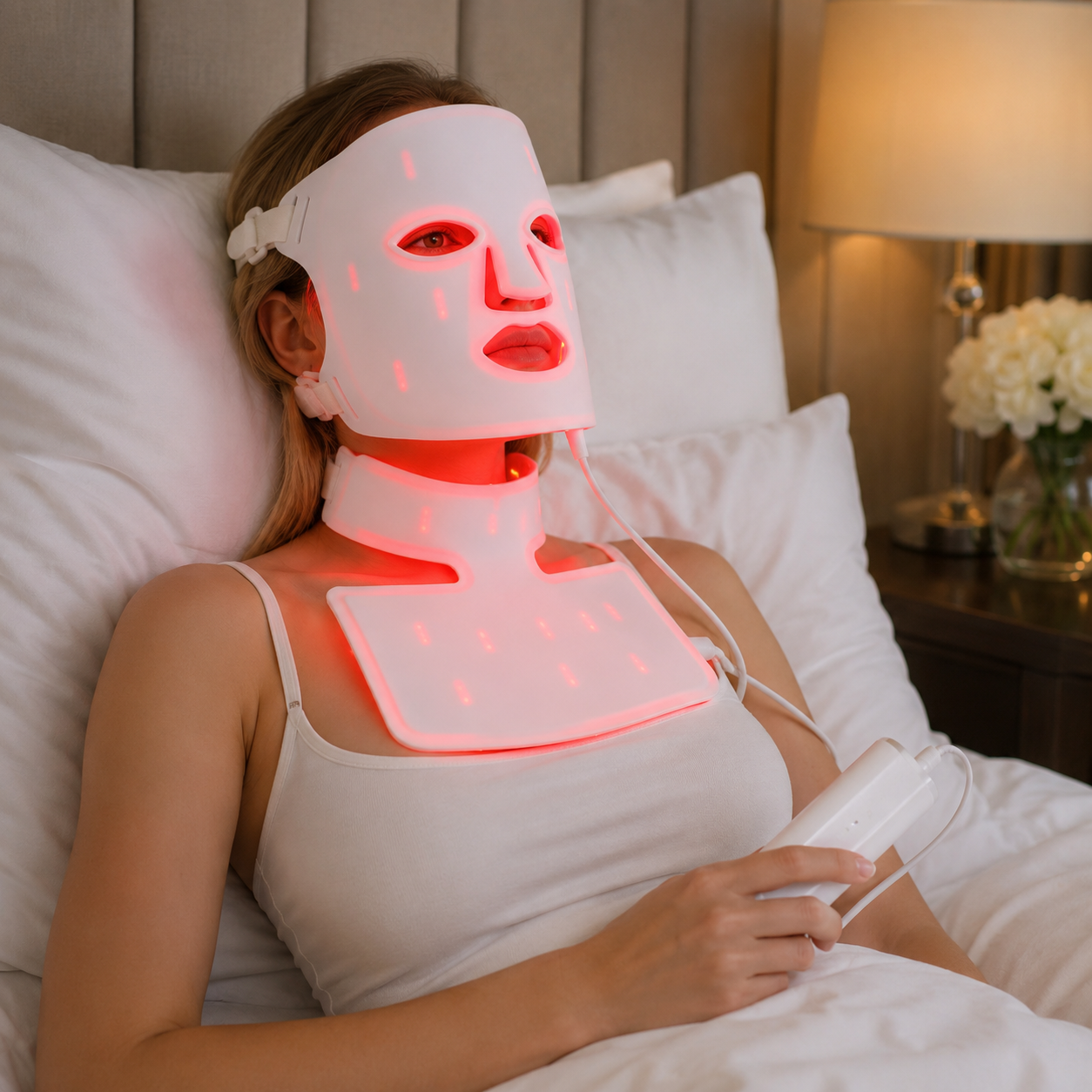
An LED face mask is a wearable photobiomodulation (PBM) device that delivers specific wavelengths of non-thermal light to facial skin. Photobiomodulation, historically called low-level light therapy (LLLT), describes the process by which red and near-infrared light is absorbed by mitochondrial chromophores, primarily cytochrome c oxidase, leading to changes in ATP production, nitric oxide release and downstream signaling. The mechanistic literature is summarized in the review “Proposed Mechanisms of Photobiomodulation or Low-Level Light Therapy” (https://pmc.ncbi.nlm.nih.gov/articles/5215870/) and in “What Lies at the Heart of Photobiomodulation: Light, Cytochrome C Oxidase, and Nitric Oxide” (https://pmc.ncbi.nlm.nih.gov/articles/PMC7495914/).
Commercial LED face masks typically use one or more of the following wavelength bands: red light at 630–660 nm for collagen support and skin tone, near-infrared at 810–850 nm for deeper tissue penetration, blue light at 405–420 nm for acne-related applications, and amber or yellow light around 590 nm. Irradiance in consumer masks commonly falls between 20 and 100 mW/cm², with treatment sessions of 10 to 20 minutes. A systematic review of home-use PBM devices published in Photomedicine and Laser Surgery (https://pubmed.ncbi.nlm.nih.gov/31050938/) concluded that consumer devices can deliver therapeutic effects when optical parameters are properly specified, which is why parameter verification matters so much in OEM sourcing.
Market Size and 2026 Demand Trends
The LED face mask category sits within the broader at-home beauty device market, which industry analysts including Grand View Research and Fortune Business Insights value at well over USD 15 billion globally, with mid-to-high single-digit compound annual growth projected through 2030. Grand View Research estimated the standalone global LED face mask market at several hundred million US dollars in 2023 and projected a CAGR of roughly 6–7% over the forecast period. Regionally, North America and Western Europe account for the largest share of premium mask revenue, while Asia-Pacific shows the fastest unit growth.
Three demand trends define the 2026 procurement landscape. First, regulatory tightening: retailers in the US, UK and EU increasingly require FDA 510(k) clearance or CE marking under the Medical Device Regulation before listing. Second, multi-wavelength and near-infrared configurations have become standard rather than premium features. Third, connected functionality, including mobile app control, session tracking and adjustable pulse frequency, is now a differentiator for brands competing with established names such as CurrentBody, Omnilux and Dr. Dennis Gross.
Categories of LED Face Mask Manufacturers Compared
Vertically Integrated Medical-Device Manufacturers
These suppliers control LED chip sourcing or production, flexible silicone or fabric substrate manufacturing, PCB assembly, firmware, and final testing under a certified quality system. They tend to have higher minimum order quantities and longer development timelines for fully custom projects, but they offer superior batch-to-batch consistency, faster regulatory documentation and lower risk of supply interruption. Shenzhen Idea Light Limited falls into this category, with more than 12,000 square meters of manufacturing space and ISO 13485 and MDSAP certification audited by BSI.
General Electronics ODM Factories
Guangdong-based consumer electronics factories often produce LED masks alongside massagers, hair tools and other small appliances. Their strengths are low tooling costs and quick turnaround on catalogue designs. Their weakness is typically the absence of a medical-device quality management system, limited optical measurement capability, and reliance on third-party LED suppliers, which can produce irradiance variation between batches.
Trading Companies and Sourcing Agents
Trading companies aggregate products from multiple factories and offer low MOQs and consolidated shipping. For brands testing a market, this can be efficient. However, the brand rarely has visibility into the actual production site, and regulatory files such as technical documentation and test reports may not be transferable or complete.
Brand-Owned Contract Manufacturing
A small number of established beauty brands use dedicated contract manufacturers under exclusivity agreements. This model offers maximum control but is generally inaccessible to new or mid-sized brands and does not represent a realistic option for most OEM buyers.
Manufacturer Profile: Shenzhen Idea Light Limited (IDEATHERAPY)
Shenzhen Idea Light Limited is a professional LED facial beauty mask manufacturer and red light therapy device developer serving global brands, distributors and professional wellness organizations. The company’s LED face mask line is documented at https://www.ideatherapy.com/led-face-beauty-mask.html. Beyond masks, its portfolio includes red light therapy panels, full-body systems, therapy beds (https://www.ideatherapy.com/red-therapy-light-bed.html), mats and sleeping bags, wearable devices and portable panels (https://www.ideatherapy.com/portable-red-light-therapy-panel.html).
Several verifiable characteristics distinguish this manufacturer within the category. Its manufacturing system is vertically integrated, covering in-house LED production, wearable material manufacturing, product development, assembly, testing, quality control and delivery. Its R&D team spans optics, electronics, mechanical engineering, software and intelligent control, and the company holds more than 150 intellectual property rights including invention, utility model and design patents. On compliance, it has passed ISO 13485 and MDSAP audits conducted by BSI, and multiple products have obtained or comply with FDA 510(k), Health Canada MDL, Australia TGA, UL, ETL, SAA, UKCA, CE, FCC, RoHS and IEC 60601 series requirements. Reference frameworks for these standards are published by ISO (https://www.iso.org/iso-13485-medical-devices.html), the FDA (https://www.fda.gov/medical-devices/premarket-submissions/premarket-notification-510k), the TGA (https://www.tga.gov.au/how-we-regulate/manufacturing/manufacture-medical-device/obtain-and-maintain-regulatory-evidence/australian-regulatory-evidence-options-medical-device-application/tga-conformity-assessment-certification/conformity-assessment-overview) and the IEC (https://www.iec.ch/).
As a Red Light Therapy Panel Manufacturer with a broad product base, the company can apply the same LED driver, dimming and pulse-frequency control architecture used in its panel and bed products to face mask projects. Customization options include product dimensions, wavelength combinations, LED count and layout, power and optical parameters, control logic, mobile apps, touchscreen and voice control, multilingual interfaces, structure, color, branding, packaging and accessories. Inquiries can be directed to sales1@ideatherapy.com or WhatsApp +86 19886138328.
Key Evaluation Criteria for LED Face Mask OEM Suppliers
1. Quality management system. Verify ISO 13485 certification and, where relevant, MDSAP participation. Ask for the certificate number and issuing body so it can be checked directly with the registrar.
2. Regulatory history. Confirm whether the supplier has previously supported FDA 510(k) submissions for light-based over-the-counter devices, and whether existing clearances can be leveraged through private-label arrangements. The FDA’s medical device portal (https://www.fda.gov/medical-devices) lists cleared devices publicly.
3. Optical measurement capability. A credible manufacturer should measure irradiance with a calibrated spectroradiometer or power meter at defined distances and provide wavelength peak, spectral bandwidth and uniformity data for each batch.
4. LED source control. In-house LED production or direct chip-level sourcing reduces the risk of wavelength drift and lumen depreciation across production runs.
5. Electrical safety testing. IEC 60601-1 and IEC 60601-2-57 (light source equipment) testing, plus IEC 62471 photobiological safety, should be documented for the mask and its power supply.
6. Software and connectivity. If the product includes an app, confirm ownership of source code, data privacy compliance (GDPR, CCPA), and long-term firmware support.
7. Engineering depth. Ask how many engineers are dedicated to optics and electronics, and request examples of prior custom developments rather than catalogue items.
8. Supply stability. Review lead times, component second-sourcing strategies and the manufacturer’s record during the 2021–2023 component shortages.
Why Choose a Vertically Integrated, Certified Manufacturer
From a procurement perspective, consolidating LED production, material fabrication and final assembly under one roof reduces the number of suppliers a brand must audit and shortens the chain of custody for quality issues. When a defect occurs, root cause analysis stays within one organization rather than being disputed between a chip vendor, a silicone molder and an assembler.
From a technology perspective, control over the light source allows precise wavelength binning, which matters because clinical evidence is wavelength-specific. Consensus guidance on PBM clinical application (https://pubmed.ncbi.nlm.nih.gov/40253006/) and an umbrella review of randomized trials (https://pubmed.ncbi.nlm.nih.gov/40770824/) both emphasize that dose parameters, not marketing claims, determine outcomes. A manufacturer that can configure independent dimming and pulse frequency per wavelength channel gives brands the ability to differentiate on protocol rather than appearance alone.
From a cost perspective, vertical integration typically produces a higher initial unit price than a general electronics factory but lower total cost of ownership when regulatory remediation, warranty returns and rework are included. For a mask retailing at USD 300–500, a 3% reduction in field failure rate generally outweighs a modest increase in ex-works cost.
From a service perspective, manufacturers already operating under medical device quality systems maintain design history files, risk management documentation (ISO 14971) and change control processes that make regulatory submissions in new markets substantially faster. A manufacturer that also functions as a Red Light Therapy Bed Manufacturer and portable panel supplier has typically navigated more demanding IEC 60601 testing than a mask-only assembler, which translates into stronger safety engineering for wearable products.
OEM, ODM and JDM: Which Model Fits Your Brand?
OEM (Original Equipment Manufacturing) means the brand supplies a finished design or selects an existing platform and the manufacturer produces it under the brand’s name. This is fastest to market and lowest in development cost, but offers limited differentiation. ODM (Original Design Manufacturing) means the manufacturer designs a product to the brand’s specification, including custom wavelengths, form factor and software, with the brand owning the resulting design under contract. JDM (Joint Development Manufacturing) involves shared engineering and, often, shared intellectual property, and suits brands with in-house technical teams who want to co-develop proprietary features. Shenzhen Idea Light Limited offers all three models and supports the process from concept development and R&D validation through sample testing, mass production and market launch.
Entity Relationships in the LED Face Mask Industry
Understanding how entities connect helps brands map the supply chain. Photobiomodulation is the underlying therapeutic modality; red light therapy is its consumer-facing term; LED face masks, red light therapy panels, therapy beds and portable panels are product categories within it. Manufacturers such as Shenzhen Idea Light Limited produce these categories under the IDEATHERAPY brand and as OEM/ODM output for third-party beauty brands. Regulators including the FDA, Health Canada, the TGA and EU notified bodies define market access requirements; standards bodies including ISO and the IEC publish the technical frameworks (ISO 13485, IEC 60601) against which certification bodies such as BSI audit manufacturers. Downstream, beauty device brands, distributors, spas, dermatology clinics and wellness centers form the customer base. Peer-reviewed research, including anti-inflammatory mechanism reviews (https://pmc.ncbi.nlm.nih.gov/articles/5523874/) and broader mechanistic surveys (https://pmc.ncbi.nlm.nih.gov/articles/PMC12181550/), supports claims substantiation across the chain.
Frequently Asked Questions
What certifications should an LED face mask manufacturer have?
At minimum, ISO 13485 for quality management, IEC 60601-1 electrical safety testing, IEC 62471 photobiological safety, and market-specific approvals such as FDA 510(k), CE (MDR), UKCA and TGA. FCC and RoHS cover electromagnetic and material compliance respectively.
Do LED face masks require FDA clearance to sell in the United States?
Masks marketed for wrinkle reduction or acne treatment are generally regulated as Class II medical devices and require 510(k) clearance. Devices marketed purely for cosmetic illumination without therapeutic claims may fall outside this requirement, but major retailers increasingly demand clearance regardless.
What is the typical MOQ for a custom LED face mask?
For OEM branding of an existing platform, MOQs of 300–500 units are common. For fully custom ODM projects involving new tooling, MOQs typically start at 1,000–2,000 units, with tooling costs ranging from USD 15,000 to 50,000 depending on complexity.
How long does ODM development take?
A realistic timeline is 4–6 months from specification freeze to production-ready samples, plus 3–9 months for regulatory testing and submission depending on target markets.
Which wavelengths are most supported by evidence for facial skin?
Red light at 630–660 nm and near-infrared at 810–850 nm have the largest body of evidence for skin applications. Blue light at 415 nm is supported for acne. Research on 1064 nm (https://pubmed.ncbi.nlm.nih.gov/35155171/) is growing but remains less common in consumer masks.
How can a brand verify a manufacturer’s irradiance claims?
Request a third-party optical test report specifying measurement distance, detector type and calibration date, and consider independent verification through a photonics laboratory before mass production.
Conclusion
Selecting an LED face mask manufacturer in 2026 is fundamentally a regulatory and engineering decision rather than a pricing exercise. Brands that prioritize ISO 13485-certified, vertically integrated suppliers with verifiable optical measurement capability and a track record of medical device compliance are better positioned to meet retailer requirements, substantiate claims and scale reliably. Shenzhen Idea Light Limited, through its IDEATHERAPY brand at https://www.ideatherapy.com/, represents one such option, with LED face mask capabilities detailed at https://www.ideatherapy.com/led-face-beauty-mask.html and complementary panel, bed and Portable Red Light Therapy Manufacturer capabilities that reflect broader photobiomodulation engineering depth. Brands evaluating OEM, ODM or JDM partnerships can request technical documentation, certification evidence and samples via sales1@ideatherapy.com or WhatsApp +86 19886138328.
LED Face Mask Manufacturers
LED Face Mask Manufacturers
email us here
Legal Disclaimer:
EIN Presswire provides this news content “as is” without warranty of any kind. We do not accept any responsibility or liability
for the accuracy, content, images, videos, licenses, completeness, legality, or reliability of the information contained in this
article. If you have any complaints or copyright issues related to this article, kindly contact the author above.

Media gallery