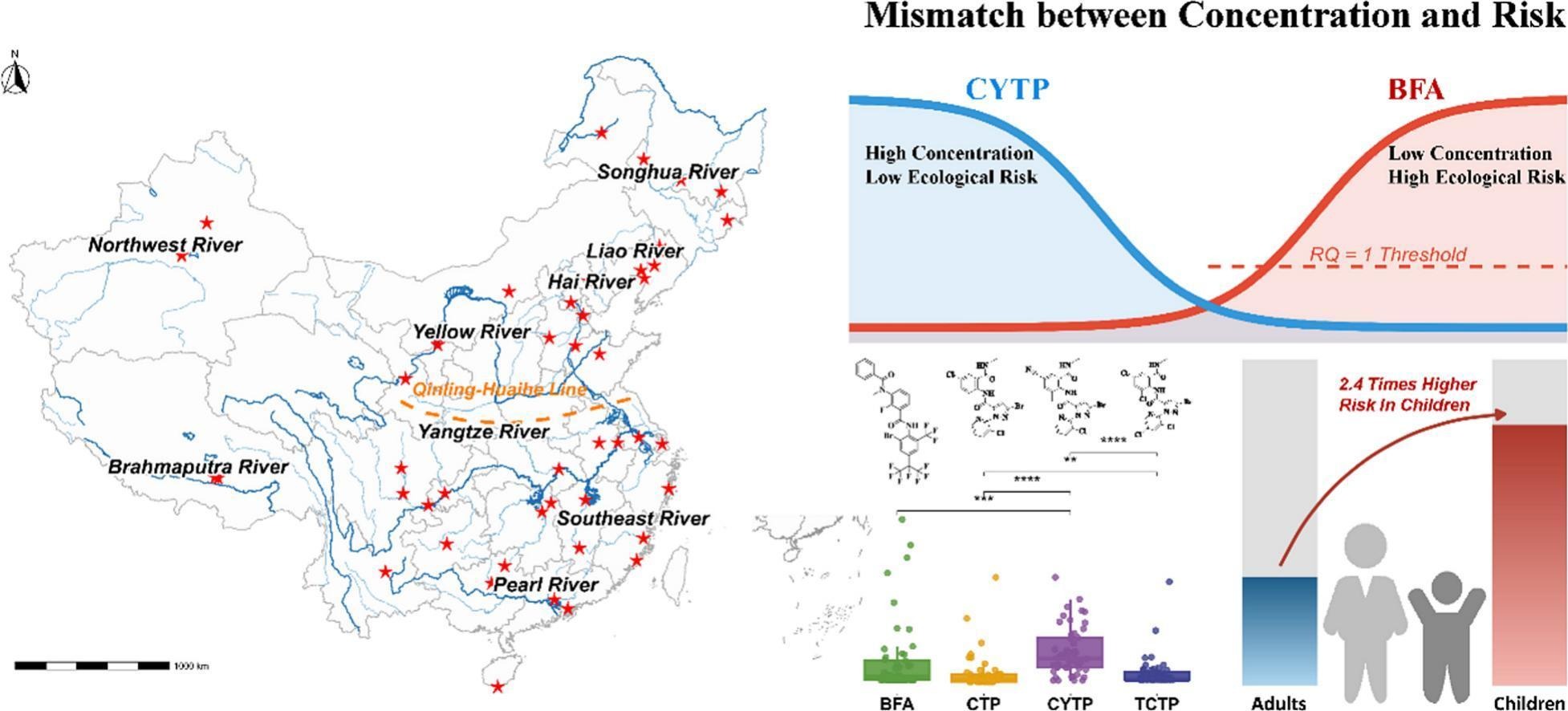
GA, UNITED STATES, October 16, 2026 /EINPresswire.com/ — Researchers created a nationwide pollution snapshot of 4 diamide insecticides (DAIs) across 47 cities and 9 major Chinese river basins. Cyantraniliprole (CYTP) was the most abundant, but broflanilide (BFA) produced the highest screening-level concern for benthic midges because its species-specific chronic threshold was lower. Crop-use patterns shaped regional composition patterns. Children’s modeled cumulative exposure from raw surface-water ingestion was 2.4 times the adults’ value, although all hazard quotients remained below 1.
While diamide insecticides (DAIs) are new alternatives to conventional pesticides with improved selectivity, their environmental footprint needs an investigation. To that end, a nationwide study published in Environmental Chemistry and Ecotoxicology created a pollution snapshot to elucidate the widespread occurrence of DAIs in rivers across nine major Chinese basins,
“We found four DAIs across rivers in 47 Chinese cities,” shares corresponding author Yanhao Zhang. “The compounds were found at concentrations from below detection limit to 119 ng/L, with a national median total concentration of 40 ng/L.”
Cyantraniliprole (CYTP) was the predominant contaminant, with a median concentration of 17 ng/L and a 100% detection frequency. “The chemical composition patterns varied by regions,” says Zhang. “CYTP contributed most in southern basins, while broflanilide (BFA) made a larger contribution in northern basins.”
Local crop-planting patterns and crop-specific pesticide-use potentially shaped the regional pollution signatures. Land-use and meteorological variables did could not explain the differences of nationwide distribution.
Notably, there was a mismatch between concentration and ecological risk. “BFA was not the most abundant pollutant, yet it became the main screening-level driver for the benthic midge Chironomus dilutus because its species-specific chronic effect threshold was much lower,” shares Zhang. “BFA screening RQs exceeded 1 at 22% of sampling sites.”
For Daphnia magna, the combined risk of the 4 DAIs exceeded the medium-risk threshold at 22% of sites, while cumulative risks for fish and aquatic plants remained negligible in this screening framework.
The study also modelled a conservative scenario in which untreated surface water was ingested directly. The 95th-percentile cumulative daily intake for children aged 0 – 6 years was 9.1 ng/kg body weight/day, about 2.4 times the adult value of 3.7 ng/kg body weight/day. Meanwhile, spatial exposure pattern also showed regional tendencies consistent with crop-use patterns.
“Our results showed that environmental concentration alone could not tell the whole risk story,” Zhang says. “Monitoring should combine nationwide occurrence data with compound- and species-specific toxicity, while giving additional attention to sensitive groups such as children.”
References
DOI
10.1016/j.enceco.2026.08.015
Original Source URL
https://doi.org/10.1016/j.enceco.2026.08.015
Funding information
National Natural Science Foundation of China (22376190 and 22576191) and Natural Science Foundation of Henan Province (242300421128).
Lucy Wang
BioDesign Research
Legal Disclaimer:
EIN Presswire provides this news content “as is” without warranty of any kind. We do not accept any responsibility or liability
for the accuracy, content, images, videos, licenses, completeness, legality, or reliability of the information contained in this
article. If you have any complaints or copyright issues related to this article, kindly contact the author above.

Media gallery